Key Takeaways
- Mindset plays a significant role in our lives, shaping how we see, grow, and act in the world.
- But after a century of research, we’ve run into a problem: public discourse sometimes reduces mindset to a single framework (like fixed vs. growth), leaving us to solve complex challenges with partial tools.
- Lasting transformation invites a comprehensive approach. This article supports this possibility by sharing a view of mindset that emerged from a pioneering study of the field as a whole.
What is Mindset?
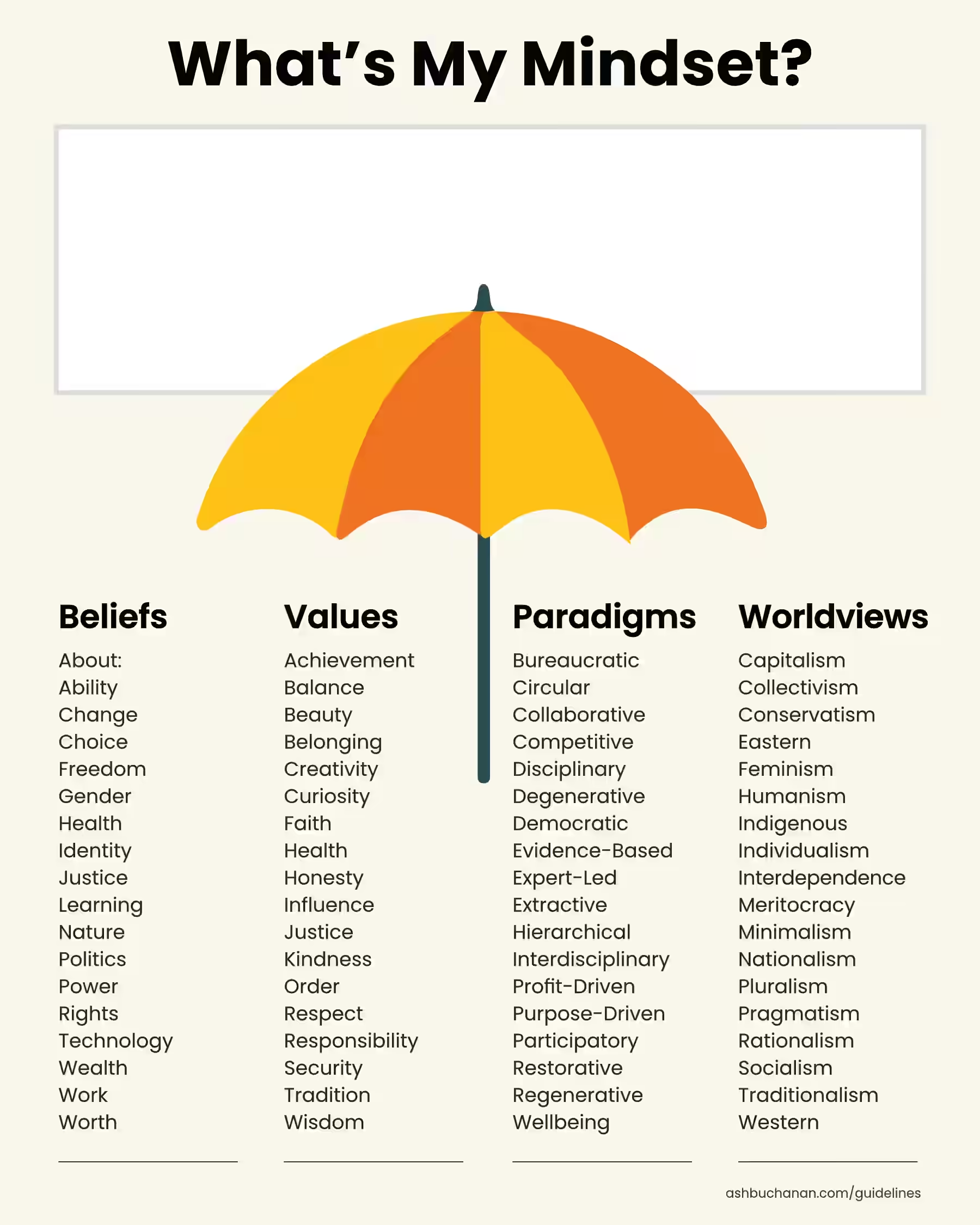
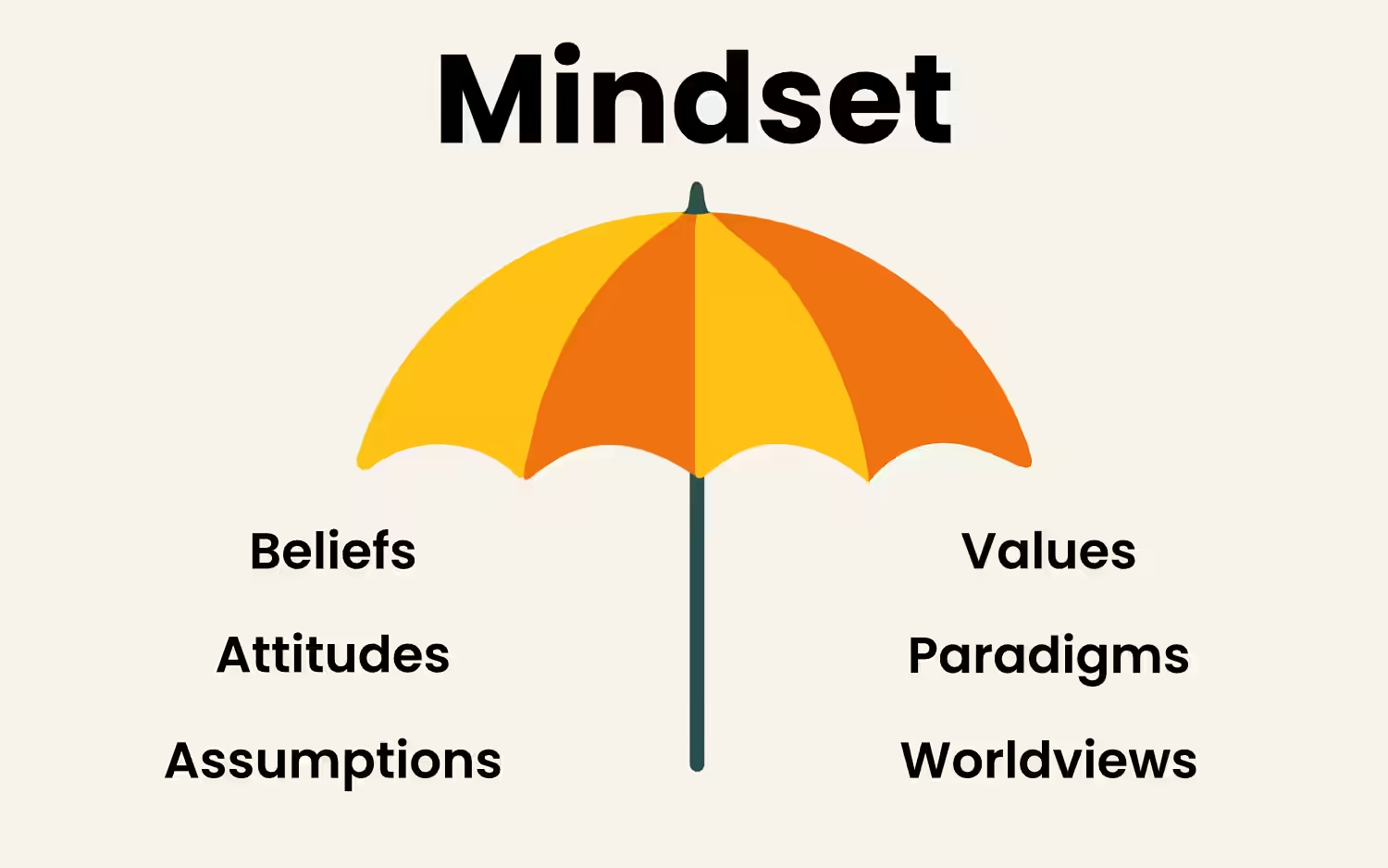
Mindset is a pattern or setting of the mind that shapes how a person thinks, feels, sees, and acts [1][2]. It is made up of a “set” of qualities, including beliefs, attitudes, values, paradigms, and worldviews [1][3][4]. Mindset possesses a degree of stability, yet it is malleable enough to evolve [5]. While mindset has a cognitive dimension, it also has emotional, embodied, and relational/collective aspects [6][7].
Mindset develops through lived experience. This developmental process is personal, collective, and intergenerational, unfolding within individuals as well as within the societies to which they belong [8][4]. Many factors can shape this developmental process, including family, culture, education, religion, politics, the media, and the natural environment [1][9].
Mindset is personal, collective, and intergenerational, existing within and between individuals and the societies they belong.
In turn, mindset has wide-ranging effects. It shapes how people think and feel, how they see and act, how they grow and develop, and how they participate in the larger systems they belong to [2][10]. For these reasons, mindset is regarded as a key factor in both personal and societal change [7]. It can influence how individuals respond to challenges, navigate uncertainty, and adapt to shifting conditions. Being aware of one’s own mindset, and shifting it when needed, is considered to be a key capacity to see, think, feel, and act in new ways [11][12][13].
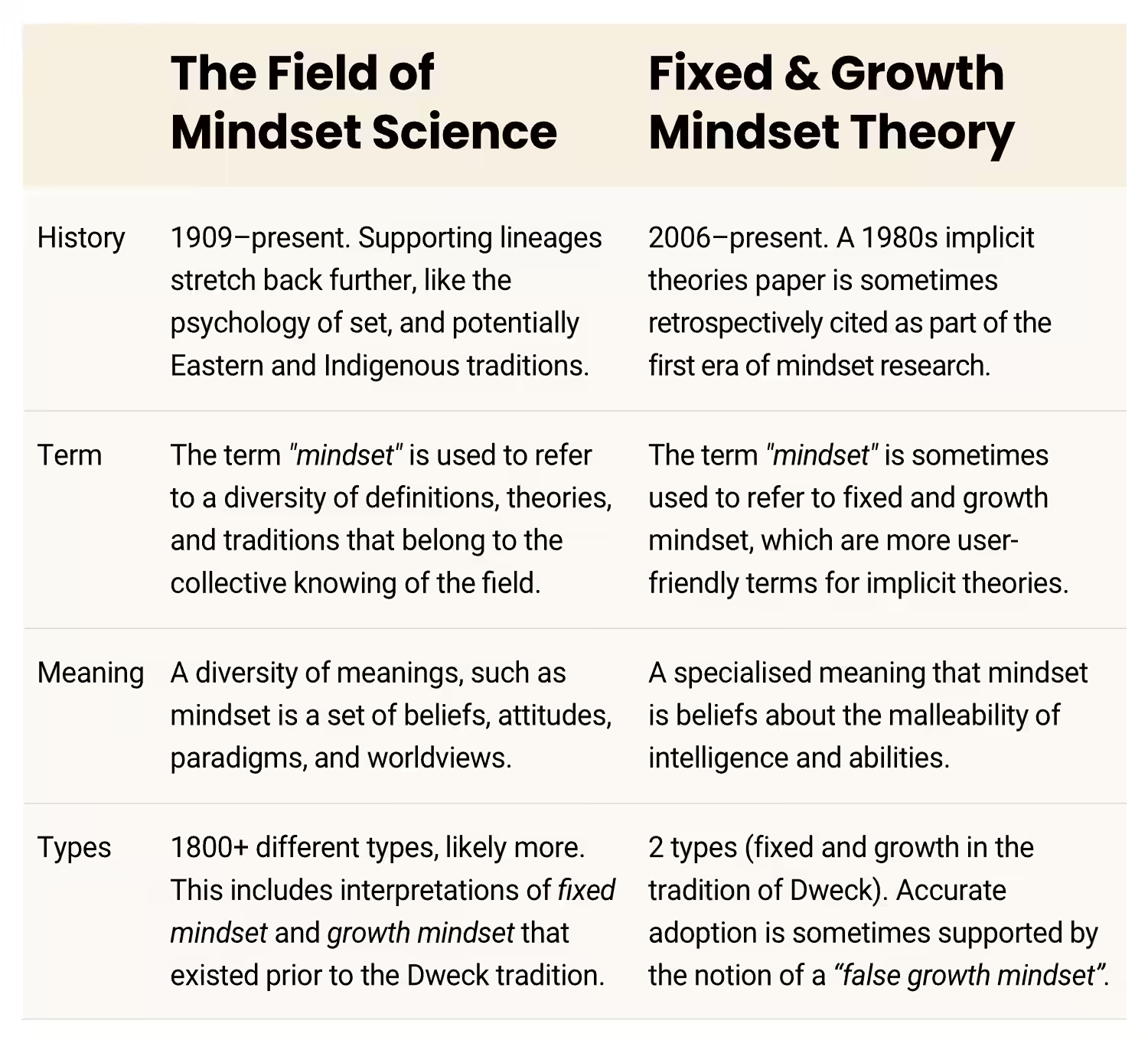
While more than a century of research has produced a rich diversity of theories and definitions, the mindset field still lacks a shared foundation [14]. Search results, large language models, and peer-reviewed papers sometimes reproduce what could be described as a fixed vs. growth bias, equating mindset with Carol Dweck’s framework, while other valuable perspectives receive little to no attention [15][16]. Even Wikipedia reflects this lack of coherence. One editor on the mindset discussion page has commented, “This article is a mess” [17]. The result is a confusing and partial picture of what a mindset is. And this matters, because it has real-world implications for our ability to address complex human challenges.
I’m a mindset scientist and practitioner. A few years ago, I realised that the mindset field, despite more than a century of research, did not yet appear to have been studied as a whole [8]. I also found that there were conflicting accounts of its history. Some traced the first era of mindset research to Carol Dweck’s work in the 1980s [18], while others traced its origins to the Würzburg School in the early twentieth century [19]. This realisation inspired me to launch a decade-long research program to understand what the mindset field has collectively learned [20]. This article presents the findings of this research, drawing on the peer-reviewed literature and bringing together a wide range of voices, perspectives, and conflicting narratives into a more complete account. It aims to serve as one of the most comprehensive references on mindset available today.
History of Mindset
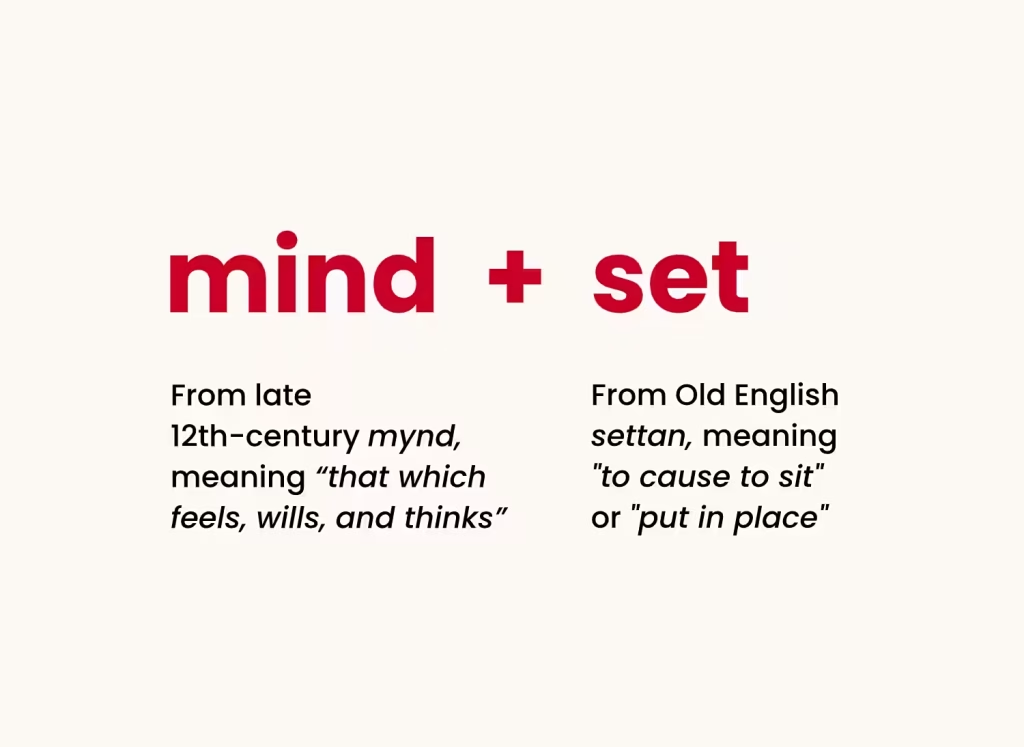
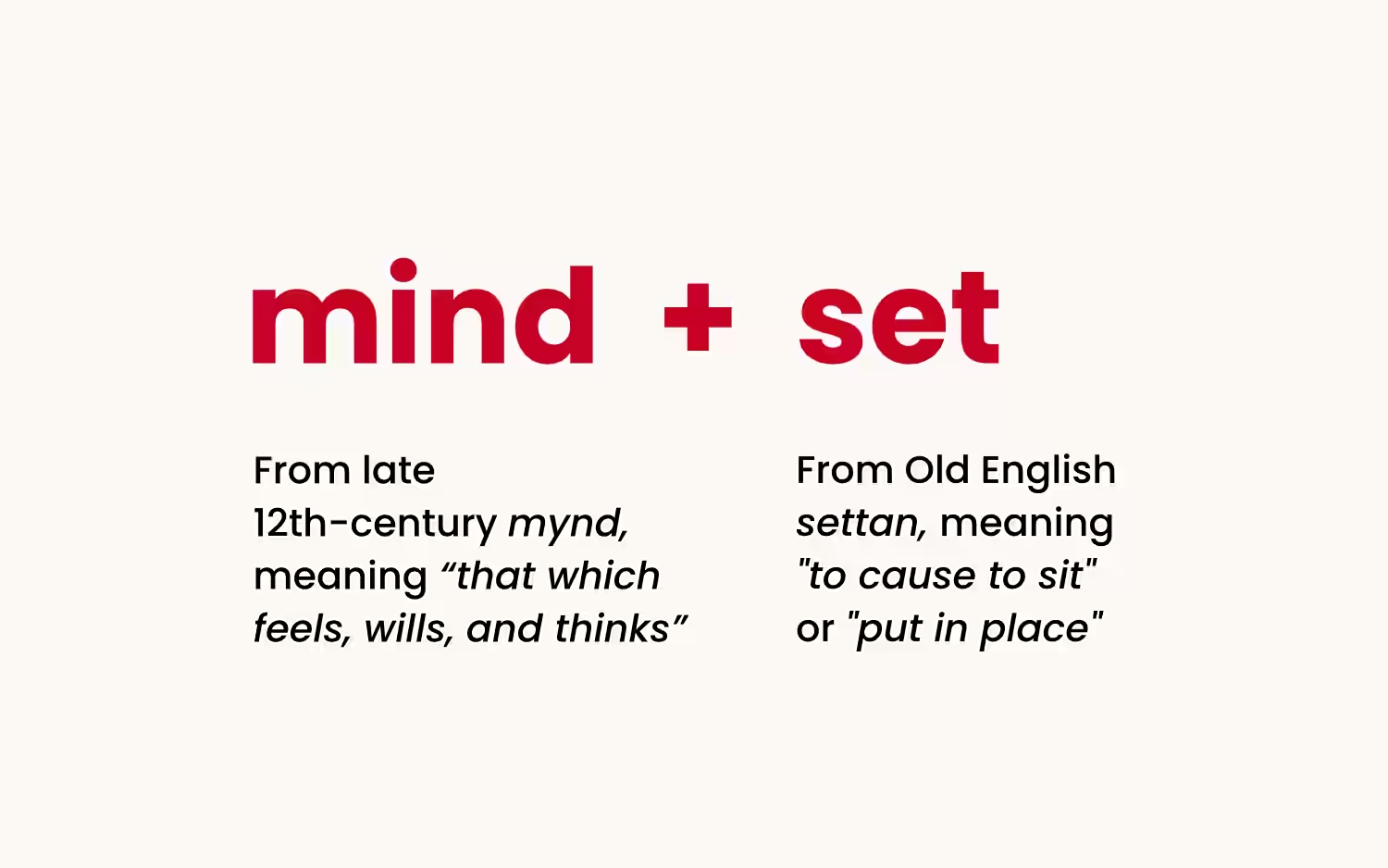
The English word mindset comes from the late 12th-century mynd (mind), meaning “that which feels, wills, and thinks,” and the Old English settan (set), meaning “cause to sit” or “put in some place” [21][8]. At its root, mindset refers to a setting of the mind that shapes how a person thinks and feels.
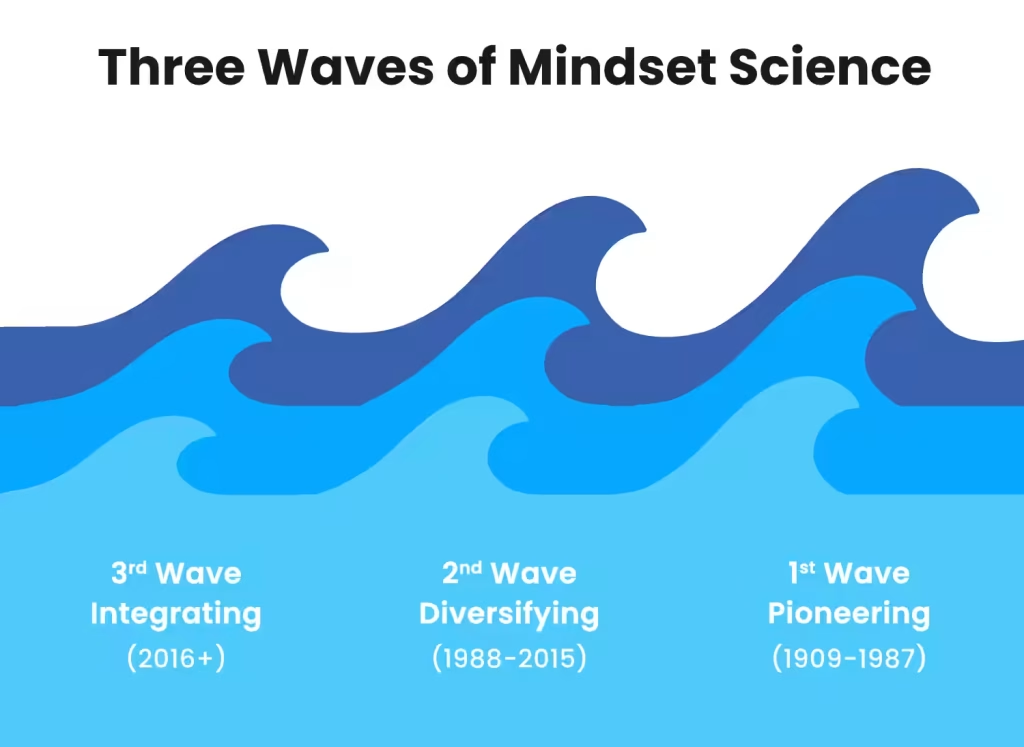
Beyond its etymology, the history of mindset falls into three broad eras or waves: the pioneering era (1909–1987), the diversifying era (1988–2015), and the integrative era (2016–present).
1. The Pioneering Era (1909–1987)
This era sees mindset emerge as an explicit area of study, and the first descriptions of its nature are shared. This includes:
- 1909: Thaddeus Lincoln Bolton associated mind-set with a movement of meaning that is felt in consciousness [22].
- 1925: William Heard Kilpatrick constructs the term mind-set by pairing the word “mind” with the psychological notion of “set”,and publishes a significant chapter called Mind-set and Learning [2].
- 1928: Joseph Jablonower looks beyond mindset being a purely cognitive quality, associating it with a person’s whole being, encompassing their heart, body, and soul [23].
- 1947: Thomas Dreier likens mindset to the music roll of a player piano, where the notes cut into the paper are the only melodies that can be played, suggesting that change requires altering the roll itself [24].
- 1971: Arthur Erickson explores how mindset can be both a filter on reality and a kind of prison, and critiques what he calls the “North American mindset” for the fragmented design of modern cities and modern life [25].
- 1980: Sue Williams brings the topic of mindset into critical social analysis, exploring its role in racism, sexism, and anthropocentrism [26].
During this pioneering era, a range of psychological traditions, including those of Einstellung and readiness, alongside broader intellectual and cultural lineages, including paradigms, worldviews, mindfulness, wisdom traditions, and Indigenous knowledge systems, appear to have contributed to the origins of the mindset tradition [8].
2. The Diversifying Era (1988–2015)
The latter part of the twentieth century is a period of significant diversification, where numerous people offer new mindset theories and practices in different contexts. Examples include:
- 1988: Glen Fisher studies mindset in the context of international relations, and publishes one of the first major, research-based bodies of work called Mindsets [11].
- 1989: Ellen Langer develops a tradition of mindfulness that focuses on the continual creation of new categories (or new mindsets) [27].
- 1989: Peter Gollwitzer proposes a theory of deliberative vs. implemental mindsets to explain the psychological transition from goal-setting to goal-striving [28].
- 1999: Donella Meadows identifies mindsets (or paradigms), as the second highest leverage point for systems change, and proposes methods to transcend mindsets [7].
- 2006: Carol Dweck‘s entity and incremental theories of intelligence were renamed to fixed and growth mindset, and became popular as a framework for understanding learning and achievement [29].
- 2007: Alia Crum studies the relationship between exercise, the placebo effect, and mindset [30].
- 2009: Robert Kegan and Lisa Lahey introduce Immunity to Change, which helps people overcome hidden mindsets that can prevent them from making the changes they genuinely seek [31].
During this diversification era, mindset becomes widely explored across education, business, and systems change contexts, but develops as a collection of independent insights rather than as a single, unified field.
3. The Integrative Era (2016–Present)
The integrative era reflects growing recognition that the mindset field would benefit from the development of a shared, field-wide foundation. Bodies of work that are working towards this possibility include:
- 2016: Robert P. French II publishes The Fuzziness of Mindsets, one of the first cross-tradition comparisons spanning the disciplines of cognitive science, social psychology, and positive psychology [32].
- 2021: Malte Krohn and colleagues develop a taxonomy of mindset, proposing six dimensions along which mindset definitions vary, including root constructs, nature, and levels at which they operate [33].
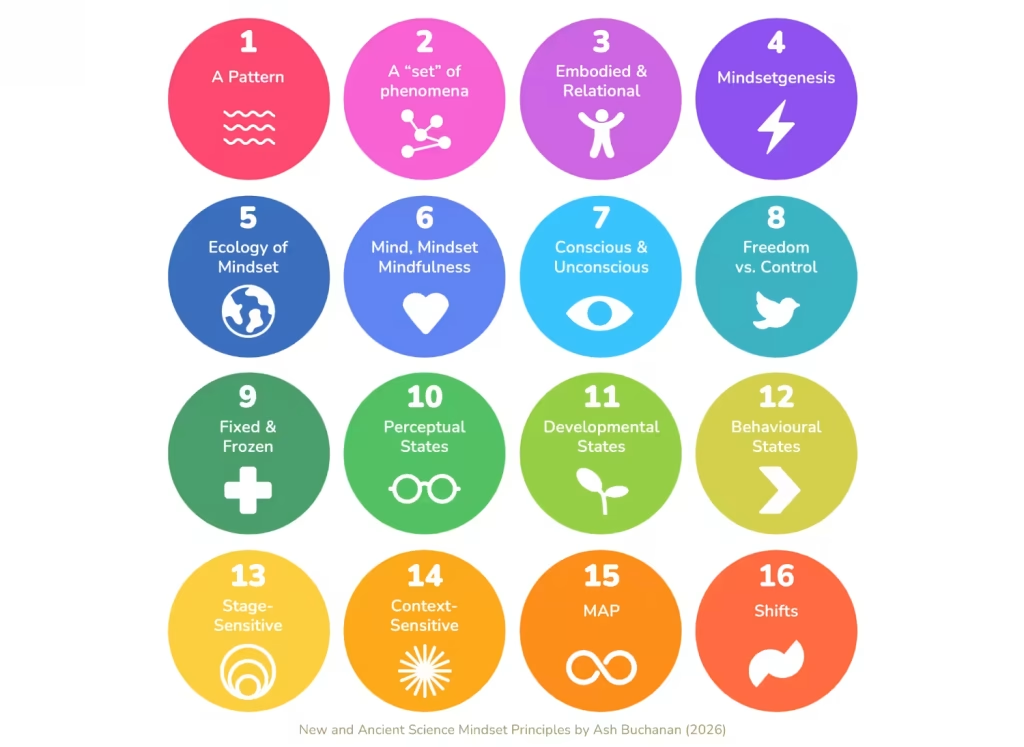
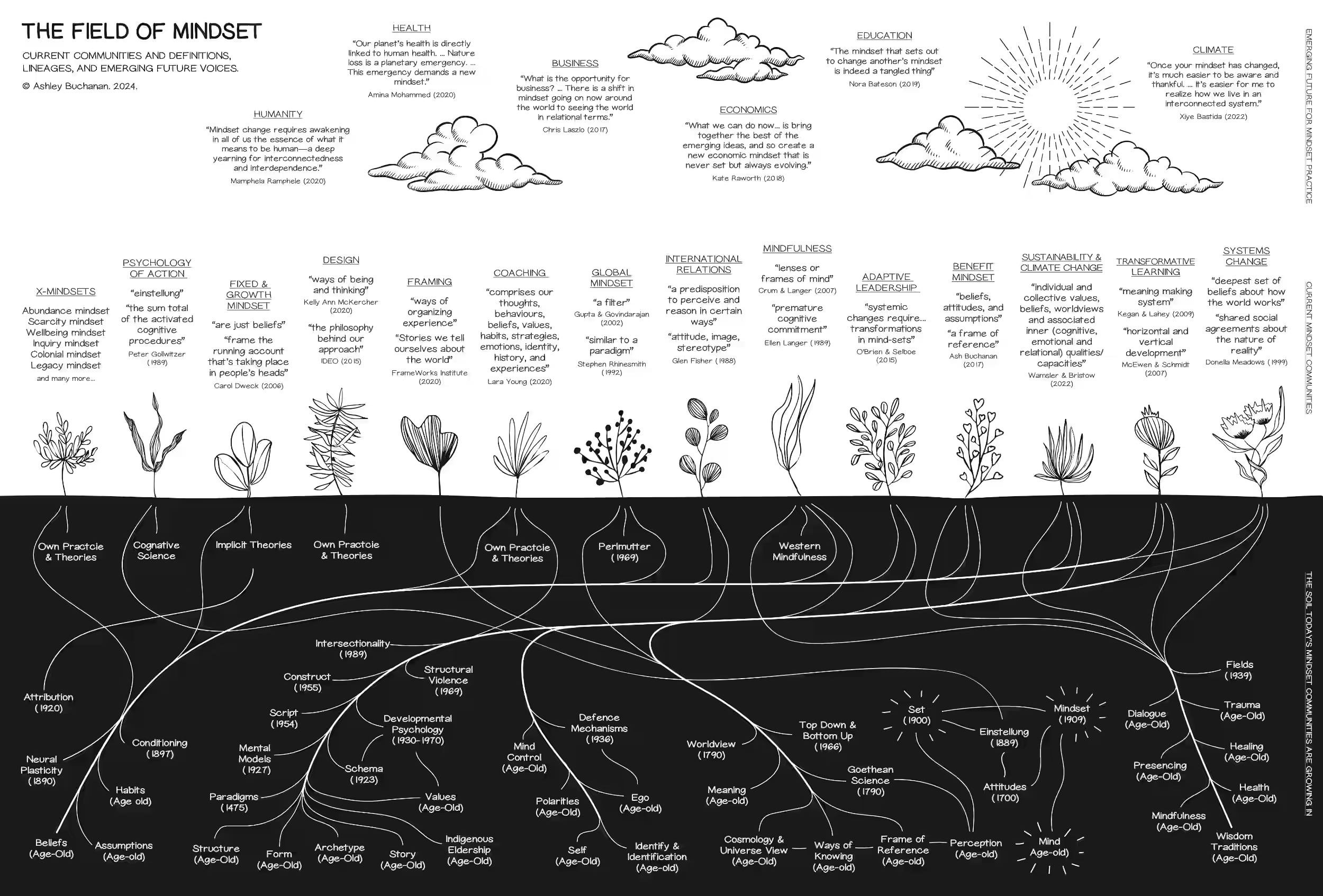
- 2024: Ash Buchanan shares a field-wide study of mindset science, reviewing 40+ theories, 100+ definitions, and 1,800+ types, and offers a comprehensive theory and 16 new and ancient science principles [34] [a]
- 2024: Rachael Yielder and colleagues publish research in Health Psychology Review that proposes an integrative framework for mindsets in health contexts [35].
- 2026: Marco Blank and colleagues shares a cross-tradition exploration of the evolution and ideology of mindset [36].
Taken together, the mindset field consists of hundreds of definitions and thousands of perspectives, forming a diverse body of knowledge that can illuminate how mindsets form, function, and shift across disciplines.
Why Defining Mindset is Hard
Despite the mindset field’s long history, with many diverse perspectives on offer, no shared working definition has been developed [5]. Instead, researchers and practitioners have typically approached the topic from different angles, each arriving at language suited to their own context. To understand this diversity of language, it can be helpful to look at how different people have described and/or defined mindset over time.
| Contributor | Definition / Description & Relevance |
| William Heard Kilpatrick (1925) | “a mind-set-to-an-end” [2] Kilpatrick argued that cultivating the right mindset is one of the most important factors for learning. |
| Glen Fisher (1988) | “a means of simplifying the environment and bringing to each new experience or event a preestablished frame of reference for understanding it” [1] Fisher proposed that mindsets develop largely through culture. While mindsets can lead to the pigeonholing of experience, he also argued they play an important role in expanding perception and reasoning. |
| Peter Gollwitzer (1990) | “Einstellung” [37] Gollwitzer’s theory distinguishes between two mindsets: a deliberative mindset, concerned with evaluating options and setting goals, and an implemental mindset, concerned with following through with action. |
| Ronald Heifetz (1994) | “a paradigm” [38] RonaldHeifetz distinguishes between technical challenges, which can be addressed with existing mindsets, and existing know-how; and adaptive challenges, which require new mindsets, and new know-how. |
| Donella Meadows (1999) | “shared social agreements about the nature of reality” [7] Meadows’ theory holds that mindsets are the sources from which systems arise, and therefore are one of the most powerful leverage points for systems change. |
| Carol Dweck (2006) | “beliefs” [29] Dweck’s theory holds there are two types, a fixed mindset, in which a person believes their qualities are carved in stone, and a growth mindset, in which a person believes their abilities can be developed over time. |
| Robert Kegan & Lisa Lahey (2009) | “the meaning-making system that shapes thoughts and feelings” [31] Kegan and Lahey propose that mindset development occurs through a subject–object process. In this process, aspects of mindset that are initially hidden can gradually become visible, creating the possibility for transformation. |
| Christine Wamsler & Jamie Bristow (2022) | “the internal lens through which people see and navigate life. They include individual and collective values, beliefs, worldviews and associated inner (cognitive, emotional and relational) qualities/capacities.” [6] Wamsler and Bristow’s work suggests that mindsets function as deep leverage points for personal and societal transformation. |
Read side by side, these definitions reveal genuine variation in how mindset has been understood, while also pointing to the potential for greater coherence. A task for the field going forward is to work towards the co-development of a shared, working definition grounded in the full body of evidence.
Common Mindset Types
Substantial work has been undertaken to categorise the different types of mindset that can exist. One study found that over 1,800 different mindset types have been identified and named in scholarly publications [34]. Some examples include:
- Entrepreneurial mindset: A pattern of thinking and acting that identifies opportunities, manages uncertainty, and creates value through action [39].
- Global mindset: The capacity to integrate diverse cultural and strategic perspectives across global contexts [40].
- Agile mindset: A set of beliefs and attitudes that values adaptability, continuous learning, collaboration, and responsiveness to change [41].
- Innovation mindset: A way of thinking and working that generates, develops, and applies novel ideas to create possibilities [42].
- Wellbeing mindset: The whole of a person’s or groups attitudes, beliefs, and values that foster wellbeing [43].
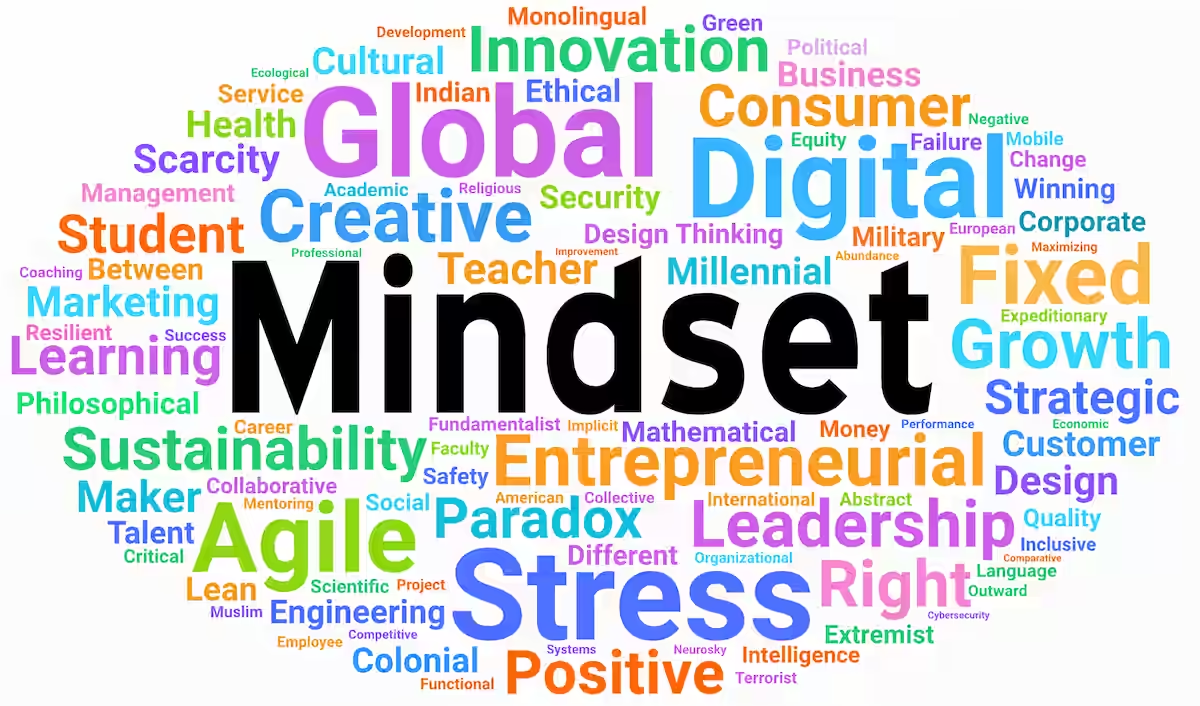
Variations also appear in how different mindset types have been defined and or described. A fixed mindset, for example, appears to have been originally defined by Richards Heuer in 1981 as a tendency to fit new information into an existing system of beliefs [44]. Since then, it has been described as uniform, monolithic ideological beliefs, values, and goals, as being associated with fixed plans and old paradigms, and a belief that intelligence and ability are unchangeable traits [45] [46] [18]. This shows there’s no single agreed definition of a fixed mindset, even this term means different things to different people.
How to Change Your Mindset
Beyond understanding what mindset is and the different theories and types that exist, researchers and practitioners have developed a wide range of approaches for working with mindset. The examples below provide starting points for exploring this diverse landscape, with links provided to practical resources for those interested in learning more.
Mindfulness (in the tradition of Ellen Langer): While mindlessness is the rigid reliance on old mindsets, mindfulness is the continual creation of new ones. By constantly noticing new things, and intentionally trying out different perspectives, you can break free from automatic behaviors and actively engage with your present reality [27].
Mindset-Aware Living / Mindset-Aware Leadership (in the tradition of Ash Buchanan): This practice involves pausing to notice the mindset that you are embodying in the present moment, in a meeting, conversation, or challenging moment. This ongoing awareness creates choice: the freedom to respond consciously rather than automatically, and to shift beliefs, values, and worldviews in real time [47].
Praise (in the tradition of Carol Dweck): Instead of praising innate talent or intelligence, which can reinforce a fixed mindset, this tradition focuses on specific techniques like praising process, strategy, and effort. The aim is to focus attention on qualities and processes that can be developed, rather than on personal traits treated as fixed [29].
Immunity to Change (in the tradition of Robert Kegan and Lisa Lahey): This method surfaces the hidden beliefs that can quietly inhibit change even when someone consciously wants to. Through a structured process, it can help you make an invisible mindset visible enough to test and shift [31].
Critiques and Criticisms of Mindset
Despite its growing influence, a number of critiques and concerns have been raised in relation to mindset research and practice.
Fragmentation: With hundreds of definitions and theories emerging across different research traditions, the field does not yet appear to have a widely shared foundation [20] [14]. This can make it difficult to compare findings across studies or build cumulative knowledge. It may also create challenges for practitioners working with frameworks that rest on different, and sometimes incompatible, assumptions.
Reductionism and conflation: The meaning of mindset is sometimes reduced down to or treated as synonymous with a single, highly-specialised theory or definition [36]. When this occurs, it may obscure the broader field and give newcomers a narrower picture of the science and its diverse traditions.
Reducing mindset down to a single specialised theory can obscure the broader field and give people a narrow view of the science and its many practices.
Discoverability issues: Search engines and large language models may sometimes favour the most dominant frameworks over more comprehensive but less established accounts [36]. This can make it harder for people to encounter the full diversity of perspectives within the field and may reinforce the prominence of already well-established frameworks.
Replication issues: Questions have been raised in the literature about the replicability and magnitude of some findings within influential mindset frameworks. For example, large-scale studies in the growth mindset tradition have reported mixed findings, including effects that are more modest or shorter-lived than those reported in some earlier research [48] [49].
Decontextualisation: Concerns have been raised about findings that have been taken out of a culturally specific context and made into an industrial recipe [50]. In practice, this raises questions around when findings from one culture or context get turned into universal advice, without checking whether they still apply.
Individualistic bias: Some mindset frameworks may locate the responsibility for change within the individual [51], where structural and systemic challenges are shifted entirely onto an individual’s mindset.
Cultural limitations: A portion of mindset science has been conducted in Western, Educated, Industrialised, Rich, and Democratic (WEIRD) contexts, raising important questions about the cultural universality of existing frameworks and the need for more diverse research traditions [52].
The future of mindset lies in developing a science that is based on the collective knowledge of the entire field and is effective for meeting the challenges of the 21st century.
Ash Buchanan
Frequently Asked Questions
- What does mindset mean? Mindset is an embodied and relational setting of the mind, that consists of beliefs, attitudes, values, and worldviews, shaping how you see and act.
- Why is mindset important? It shapes how you navigate uncertainty, respond to challenges, and participate in communities, societies, and ecologies.
- What types of mindset are there? One study found over 1,800 types of mindset exist, including fixed, growth, agile, entrepreneurial, and wellbeing mindsets.
- How do you change a mindset? You may be able to change a mindset through practices, including mindfulness, mindset-aware living, reframing, praise, and the immunity to change process.
- How does fixed vs. growth mindset differ from the wider mindset field? Fixed and growth mindset is a specialised theory proposed in 2006 by Carol Dweck. The wider mindset field is much older, and more diverse, with theories proposed by William Heard Kilpatrick, Peter Gollwitzer, Robert Kegan, Lisa Lahey, Robert P. French II, Ash Buchanan, and more.
Share this article
About the Author
Ash Buchanan, MAPP, is a mindset scientist, teacher, and bestselling author who led a decade-long research program studying the mindset field as a whole. He offers training, learning partnerships, and project support for people and teams who want to use mindset science to engage complexity and create meaningful change. Ash is the author of five books, including the #1 Amazon bestsellers: Mindset Aware, The Nature of Mindset, and Handbook of Mindset Research. His research appears in Springer Nature, International Journal of Wellbeing, and Middle East Journal of Positive Psychology.
References
Note: You are welcome to quote or reference short passages of this article for personal and educational use, provided attribution and a direct link to this page are given. Reference: Buchanan, A. (2026). Mindset: What it is, Why it Matters & How it Changes.
[1] Fisher, G. (1988). Mindsets: The role of culture and perception in international relations. Intercultural Press.
[2] Kilpatrick, W. H. (1925). Foundations of method: Informal talks on teaching. Macmillan.
[3] Pourdehnad, J., Warren, B., Wright, M., & Mairano, J. (2006, June). Unlearning/learning organizations–The role of mindset. In Proceedings of the 50th Annual Meeting of the ISSS-2006, Sonoma, CA, USA. https://journals.isss.org/index.php/proceedings50th/art.
[4] Shales, J. M. (1930). A study of mind-set in rural and city school children. Journal of Educational Psychology, 21(4), 246–258. https://doi.org/10.1037/h0073401.
[5] Krohn, M., Hattenberg, D.Y., Krueger, N.F., Herstatt, C. (2024). A Taxonomy of Mindsets: Current Conceptualizations and Future Directions for Mindset-Based Research in Innovation and Entrepreneurship. In: Mikkelsen, K., Wolf, A. (eds) Minds, Brains, and D.
[6] Wamsler, C., & Bristow, J. (2022). At the intersection of mind and climate change: integrating inner dimensions of climate change into policymaking and practice. Climatic Change, 173(1), 1-22. https://doi.org/10.1007/s10584-022-03398-9.
[7] Meadows, D. H. (1999). Leverage points: Places to intervene in a system. Sustainability Institute. https://donellameadows.org/archives/leverage-points-places-to-intervene-in-a-system/.
[8] Buchanan, A. (2023). Perspectives: The History of Mindset: A Critical Review. Middle East Journal of Positive Psychology, 9, 79–99. https://www.middleeastjournalofpositivepsychology.org/index.php/mejpp/article/view/166.
[9] Courtis, S. A. (1939). Philosophy of education. Brumfield & Brumfield.
[10] Kegan, R., & Lahey, L. L. (2009). From subject to object: A constructive-developmental approach to reflective practice. In Handbook of reflection and reflective inquiry: Mapping a way of knowing for professional reflective inquiry (pp. 433-449). Boston, M.
[11] Fisher, G. (1998). The mindsets factor in ethnic conflict: A cross-cultural agenda. Intercultural Press.
[12] Buchanan, A. (2024). Handbook of Mindset Research. https://www.researchgate.net/publication/384903190_Handbook_of_Mindset_Research.
[13] Heifetz, R. (1994). Leadership without easy answers. Harvard University Press.
[14] French, R. P., II. (2016). The fuzziness of mindsets. International Journal of Organizational Analysis, 24(4), 673-691. https://doi.org/10.1108/IJOA-09-2014-0797.
[15] Burgoyne, A. P., Hambrick, D. Z., & Macnamara, B. N. (2020). How firm are the foundations of mind-set theory? The claims appear stronger than the evidence. Psychological science, 31(3), 258-267.
[16] Yeager, D. S., & Dweck, C. S. (2020). What can be learned from growth mindset controversies?. American psychologist, 75(9), 1269.
[17] Wikipedia. (n.d.). mindset/talk. Accessed July 2026. https://en.wikipedia.org/wiki/Talk:Mindset.
[18] Dweck, C. S., & Yeager, D. S. (2019). Mindsets: A view from two eras. Perspectives on Psychological Science,14(3), 481–496. https://doi.org/10.1177/1745691618804166.
[19] Gollwitzer, P.M. and Bayer, U.C. (1999). Deliberative versus implemental mindsets in the control of action. In Daul-Process Theories in Social Psychology, Guilford Press, New York. https://www.researchgate.net/publication/30014257_Deliberative_versus_impl.
[20] Buchanan, A. (2024). Handbook of Mindset Research. https://www.researchgate.net/publication/384903190_Handbook_of_Mindset_Research.
[21] Oxford English Dictionary. (n.d.). Mindset, n. Retrieved July 17, 2026, from https://www.oed.com/dictionary/mindset_n.
[22] Bolton, T. L. (1909). On the efficacy of consciousness. The Journal of Philosophy, Psychology and Scientific Methods, 6(16), 421–432. https://doi.org/10.2307/2010890.
[23] Jablonower, J. (1928). The project method and the socialised reaction. The Mathematics Teacher, 21(8), 431–441. https://doi.org/10.5951/MT.21.8.0431.
[24] Dreier, T. (1947). The religion of a vagabond. Harper & Brothers..
[25] Erickson, A. (1971). Resources for effective innovation. Proceeding conference on cities. Indianapolis. https://www.google.com.au/books/edition/Proceedings/JesHq0Awx6UC?hl=en.
[26] Williams, S. (1980). Nature speaks. Off our backs, 10(11), 25–25. https://www.jstor.org/stable/25773414.
[27] Langer, E. J. (1989). Mindfulness. Addison-Wesley.
[28] Gollwitzer, P. M., & Kinney, R. F. (1989). Effects of deliberative and implemental mind-sets on illusion of control. Journal of Personality and Social Psychology, 56(4), 531. https://doi.org/10.1037/0022-3514.56.4.531.
[29] Dweck, C. S. (2006). Mindset: The new psychology of success. Random House.
[30] Crum, A. J., & Langer, E. J. (2007). Mind-set matters: Exercise and the placebo effect. Psychological Science, 18(2), 165– 171. https://doi.org/10.1111/j.1467-9280.2007.01867.x.
[31] Kegan, R., & Lahey, L. (2009). Immunity to change. Harvard Business Review Press.
[32] French, R. P., II. (2016). The fuzziness of mindsets. International Journal of Organizational Analysis, 24(4), 673-691. https://doi.org/10.1108/IJOA-09-2014-0797.
[33] Krohn, M., Hattenberg, D.Y., Krueger, N.F., Herstatt, C. (2024). A Taxonomy of Mindsets: Current Conceptualizations and Future Directions for Mindset-Based Research in Innovation and Entrepreneurship. In: Mikkelsen, K., Wolf, A. (eds) Minds, Brains, and D.
[34] Buchanan, A. (2024). Handbook of Mindset Research. https://www.researchgate.net/publication/384903190_Handbook_of_Mindset_Research.
[35] Yielder, R., Crum, A., Weinman, J., & Petrie, K. J. (2026). Employing illness perceptions and mindsets in health contexts: towards an integrative framework. Health Psychology Review, 20(1), 197-222. https://doi.org/10.1080/17437199.2025.2552244.
[36] Blank, M., Nicklich, M., Pfeiffer, S., Sauer, S., & Tihlarik, A. (2026). From Academic Theory to Management Jargon: Exploring the Evolution and Ideology of the Concept of Mindset. American Journal of Management, 26(1), 122.
[37] Gollwitzer, P. M., Heckhausen, H., & Steller, B. (1990). Deliberative and implemental mind-sets: Cognitive tuning toward congruous thoughts and information. Journal of Personality and Social Psychology, 59(6), 1119. https://doi.org/10.1037/0022-3514.59.6..
[38] Heifetz, R. (1994). Leadership without easy answers. Harvard University Press.
[39] McGrath, R. G., & MacMillan, I. C. (2000). The entrepreneurial mindset: Strategies for continuously creating opportunity in an age of uncertainty. Harvard Business Press.
[40] Gupta, A. K., & Govindarajan, V. (2002). Cultivating a global mindset. Academy of Management Perspectives, 16(1), 116-126. http://dx.doi.org/10.5465/AME.2002.6640211.
[41] van Manen, H., & van Vliet, H. (2014). Organization-wide agile expansion requires an organization-wide agile mindset. In Product-Focused Software Process Improvement: 15th International Conference, PROFES 2014, Helsinki, Finland, December 10-12, 2014. Pro.
[42] Kuczmarski, T. D. (1996). Fostering an innovation mindset. Journal of consumer marketing, 13(6), 7-13. https://doi.org/10.1108/07363769610152563.
[43] Nagler, J. (2021). What is a wellbeing mindset? https://www.wellbeingmindset.org/wellbeing-mindset/.
[44] Heuer, R. J. (1981). Applications of Bayesian Inference in Political Intelligence. In Expert-generated Data, 93-121.
[45] Ingalsbee, T. (1993). Resource and action mobilization theories: The new social-psychological research agenda. Berkeley journal of sociology, 38, 139-155.
[46] Mathebula, M. (2000). Challenging old paradigms: new roles for rail safety managers. SATC 2000.
[47] Buchanan, A. (2025). Mindset Aware: A Practical Guide to Know, Love, Grow and Free Your Mindset.
[48] Macnamara, B. N., & Burgoyne, A. P. (2023). Do growth mindset interventions impact students’ academic achievement? A systematic review and meta-analysis with recommendations for best practices. Psychological bulletin, 149(3-4), 133.
[49] Sisk, V. F., Burgoyne, A. P., Sun, J., Butler, J. L., & Macnamara, B. N. (2018). To what extent and under which circumstances are growth mind-sets important to academic achievement? Two meta-analyses. Psychological science, 29(4), 549-571.
[50] Snowden, D. (2022). A mélange of potential, not a mindset. Cynefin blog. https://thecynefin.co/a-melange-of-potential-not-a-mindset/.
[51] Snowden, D. (2022). A mélange of potential, not a mindset. Cynefin blog. https://thecynefin.co/a-melange-of-potential-not-a-mindset/.
[52] Zrudlo, I. (2025). An Analysis of Growth Mindset Theory and Interventions in Education. Studies in Philosophy and Education, 1-18.
[a] This entry reflects the author’s own body of work. It is offered as one perspective from a fellow traveller, and is shared to sit alongside all other perspectives.
.