Key Takeaways
- Far from being a 1980s breakthrough, mindset history spans over a century of diverse traditions and supporting lineages. Once you start examining this history, it can be hard to stop: the story is richer than many realise.
- The earliest known usage of the term mind-set was in 1909 by psychologist Thaddeus Lincoln Bolton.
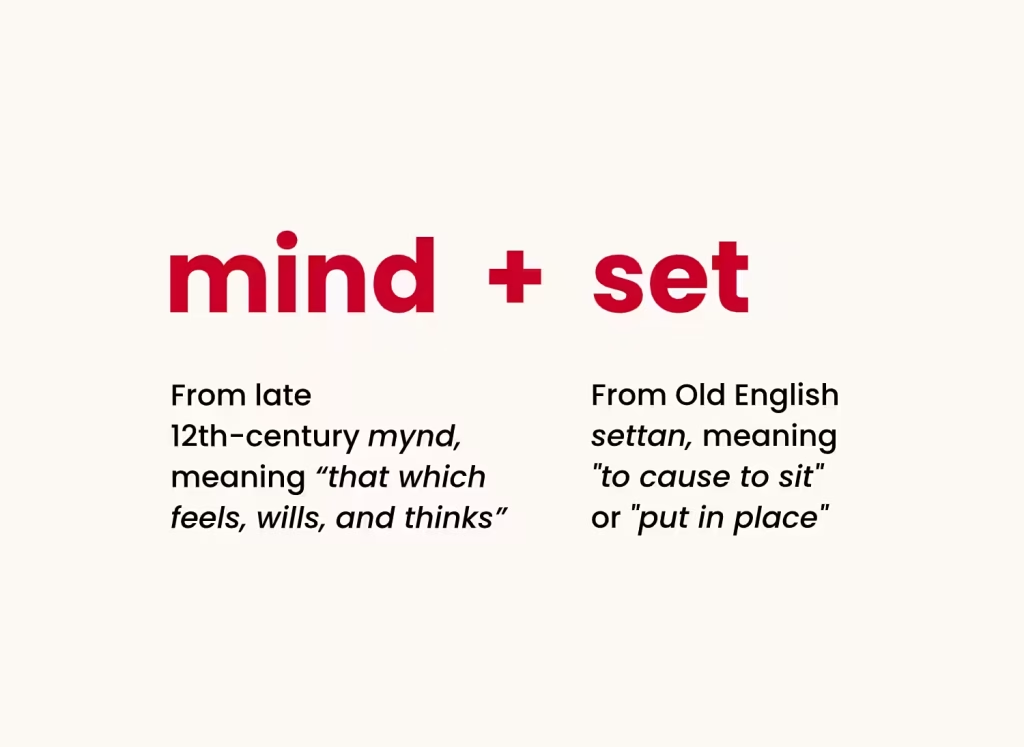
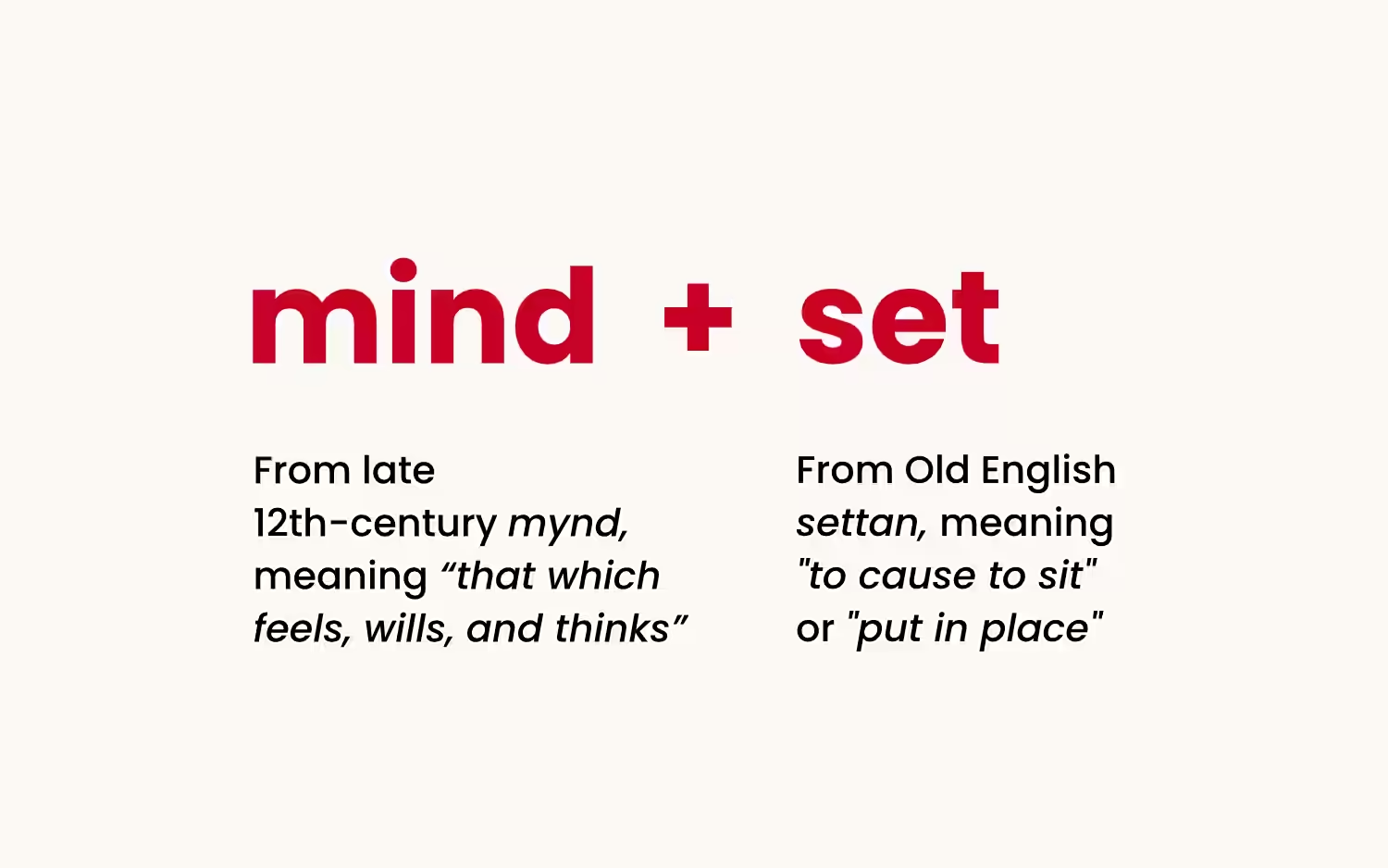
- The word mindset comes from mind (late 12th-century mynd) and set (Old English settan), and refers to a setting of the mind that shapes how a person feels and thinks.
Mindset is everywhere. It’s taught in schools. Discussed in boardrooms. Studied by psychologists.
But where did our understanding of mindset actually come from?
The story, it seems, is far more fascinating than many people realise.
Some will tell you it started with Carol Dweck’s research in the 1980s. Others will take you back further still, to the Würzburg School in the early twentieth century. Yet these accounts describe only a small part of a much richer history that has largely faded from view. It’s contributing to a curious gap: we still don’t have a widely accepted account of mindset history, leaving millions of people without a holistic foundation to ground their understanding and practice.
I believe it’s time we address this situation.
I am a mindset scientist and practitioner. A few years ago, I had a realisation that I wasn’t properly grounding my own work in the full history of the mindset field, so I went looking for a historical review. To my surprise, I couldn’t find one. Intrigued by this gap, I launched and led what appears to be the first peer-reviewed study into the history of mindset, bringing together often overlooked contributions and conflicting narratives into a more complete account.
What follows here is the story of what this study found: a guided tour through the history of mindset, from its often-overlooked origins, through the twists and turns of its evolution, to the story we know today.
The Etymology of Mindset
Current evidence suggests the term mindset first appeared in the early 1900s as jargon in education and psychology texts. It’s composed of two words: mind, from the late 12th-century mynd, meaning “that which feels, wills, and thinks,” and set, from the Old English settan, meaning “cause to sit” or “put in some place”. At its root, a mindset refers to a setting of the mind, that shapes a person’s thoughts and feelings.
The Evolution of Mindset
1900s: The Origins of Mind-set
Thaddeus Lincoln Bolton appears to be the first person to use the term mind-set in a scientific context. In an article called On the Efficacy of Consciousness, he describes how perception gives rise to a movement of meaning that is shaped by a person’s mental unity and mind-set.
1910s: Mind-set as a Task Attitude
Edward Kellogg Strong and Margaret Hart Strong use the term mind-set interchangeably with attitude in their studies of memory and learning. In this usage, mind-set is something that can influence how people engage in tasks.
1920s: Mind-set as a Whole-Person Orientation
William Heard Kilpatrick describes his construction of the term mind-set by combining the term mind with the psychology of set. In psychology, set refers to a predisposition, readiness, or determining tendency of a person to perceive and act in a certain way and not others.
Around the same period, researchers such as Joseph Jablonower and Marie Gugle extend the idea further, associating mindset with a person’s whole being, including their head, heart, body, and soul. By the end of the decade, John M. Shales studies how mindset is shaped by environment and culture, illuminating its relational dimensions.
1940-1960s: The Player-Piano Metaphor
Thomas Dreier compares mindset to the music roll of a player piano, where the notes cut into the roll determine which music can be played, suggesting that change requires altering the roll itself. Thomas Staton frames mindset as a perceptual filter that can cause individuals to see what they want to see.
“What we call a mindset is like a music roll used on a piano player. The notes cut into the paper are the only notes that will be played. To change the melody changes must be made to the music roll itself.” – Thomas Dreier
1970s: Mindset as Both Filter and Prison
Arthur Erickson explores how mindset can be both a filter on reality and a kind of prison. He critiques what he calls the “North American mindset” for shaping the fragmented design of modern cities and ways of living.
1980s: The Great Diversification
Sue Williams extends the idea of mindset into social critique, linking mindset to racism, sexism, and anthropocentrism. Glen Fisher studies mindset in international relations, and publishes one of the first major, research-based bodies of work called Mindsets. Ellen Langer develops a tradition of mindfulness centred on the continual creation of new categories (or new mindsets). Peter Gollwitzer proposes a theory of deliberative vs. implemental mindsets to explain the psychological transition from goal-setting to goal-striving.
1990s: Mindset Goes Global
Stephen Rhinesmith writes about the idea of “global mindset,” describing it as a filter or paradigm that shapes how managers interpret and act in complex global environments. Ronald Heifetz distinguishes between technical and adaptive challenges, where the latter requires a shift in mindset rather than application of existing know-how. Donella Meadows identifies mindsets (or paradigms), as the second highest leverage point for systems change, and proposes methods to transcend mindsets.
2000s: Mindset in Learning
Carol Dweck renames entity and incremental theories of intelligence to fixed and growth mindset, and popularises it as a framework for learning and success. Robert Kegan and Lisa Lahey introduce Immunity to Change, which is designed to help people overcome hidden mindsets that can prevent them from making the changes they genuinely seek.
2010 & 2020s: Toward an Integrated Science
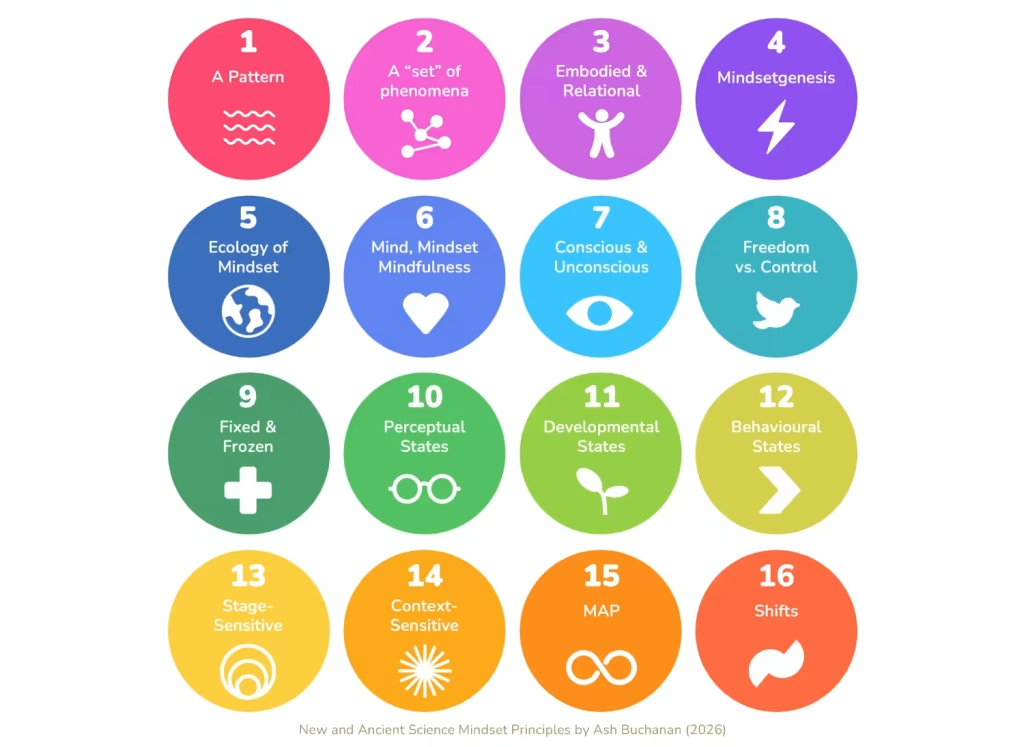
Robert P. French II publishes The Fuzziness of Mindsets, one of the first cross-tradition comparisons spanning the disciplines of cognitive science, social psychology, and positive psychology. Malte Krohn and colleagues develop a taxonomy of mindset, proposing six dimensions along which mindset definitions vary, including root constructs, nature, and levels at which they operate. Ash Buchanan shares a field-wide study of mindset science, reviewing 40+ theories, 100+ definitions, and 1,800+ types, and offers a comprehensive theory and 16 new and ancient science principles [a]. Rachael Yielder and colleagues publish research in the Health Psychology Review that proposes an integrative framework for mindsets in health contexts. Marco Blank and colleagues share a cross-tradition exploration of the evolution and ideology of mindset.
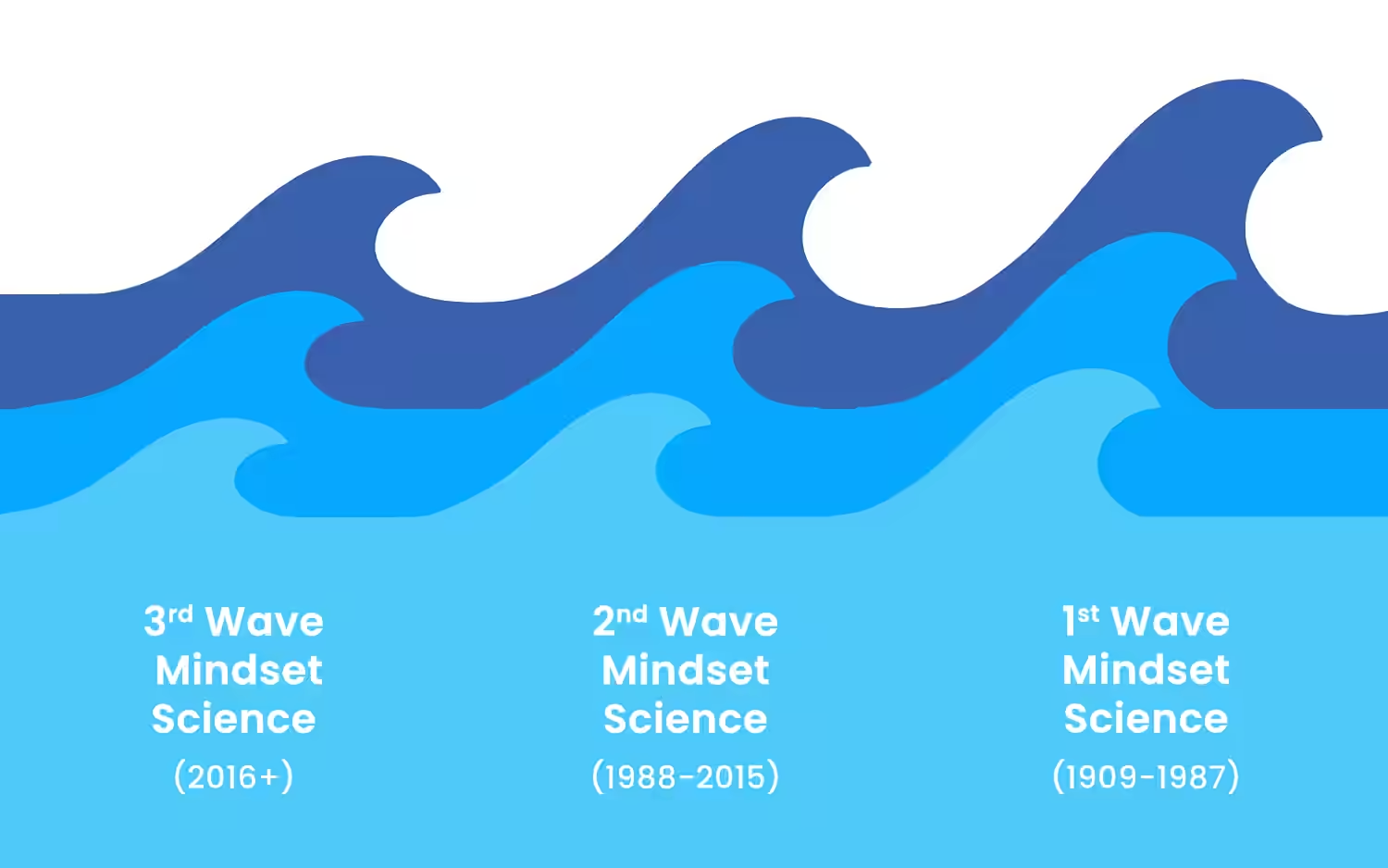
Taken together, it could be suggested the historical development of mindset has unfolded in three broad waves: the pioneering wave (1909–1987), the diversifying wave (1988–2015), and the integrative wave (2016–present).
Supporting Lineages of Mindset
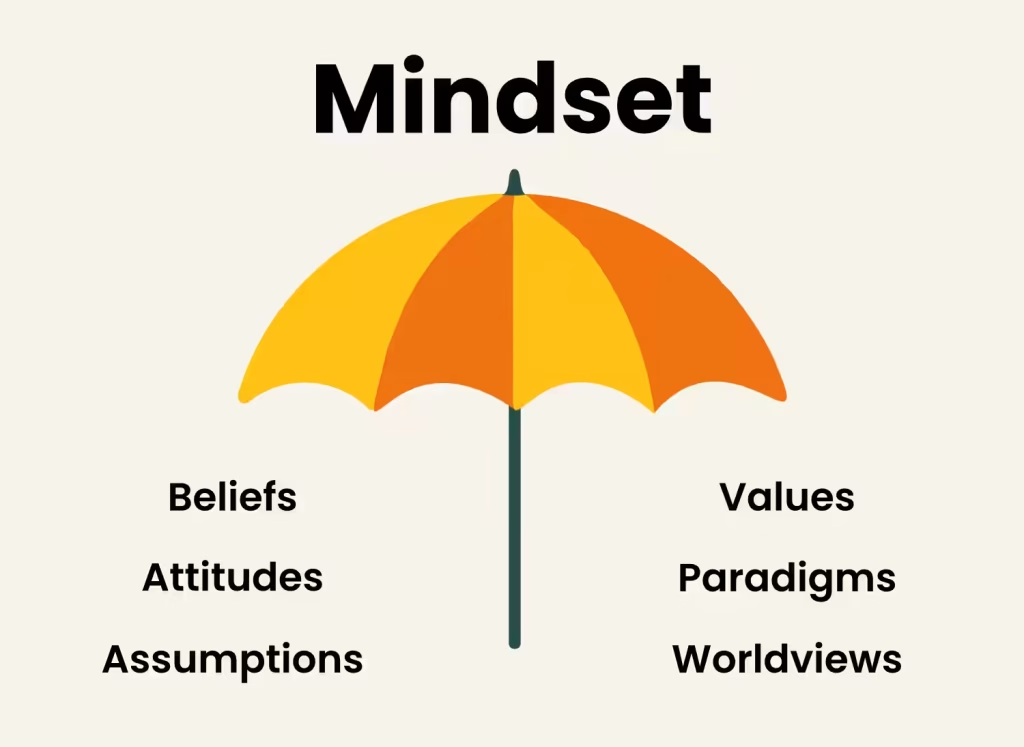
It is also important to acknowledge that the history of mindset shared here doesn’t exist in a vacuum, and that each tradition referenced is drawing on the wisdom of other lineages to support them in their mindset work. These traditions could be considered to be like the larger ocean from where the three waves of mindset history have emerged. This includes, but is not limited to, the lineages of mind, set, beliefs, attitudes, assumptions, attributions, values, Einstellung (associated with the Würzburg School), schemas, constructs, paradigms, worldviews, mindfulness, and wisdom traditions. While this history is specifically tracking the English-language scientific lineage, mindset also likely has parallel and prior histories in other language traditions.
What the History of Mindset Reveals
Looking across more than 100 years of research, a clear picture begins to emerge. The history of mindset is not the history of a single idea or discovery. It is the emergence of multiple traditions, each studying the nature of mindset from a different viewpoint.
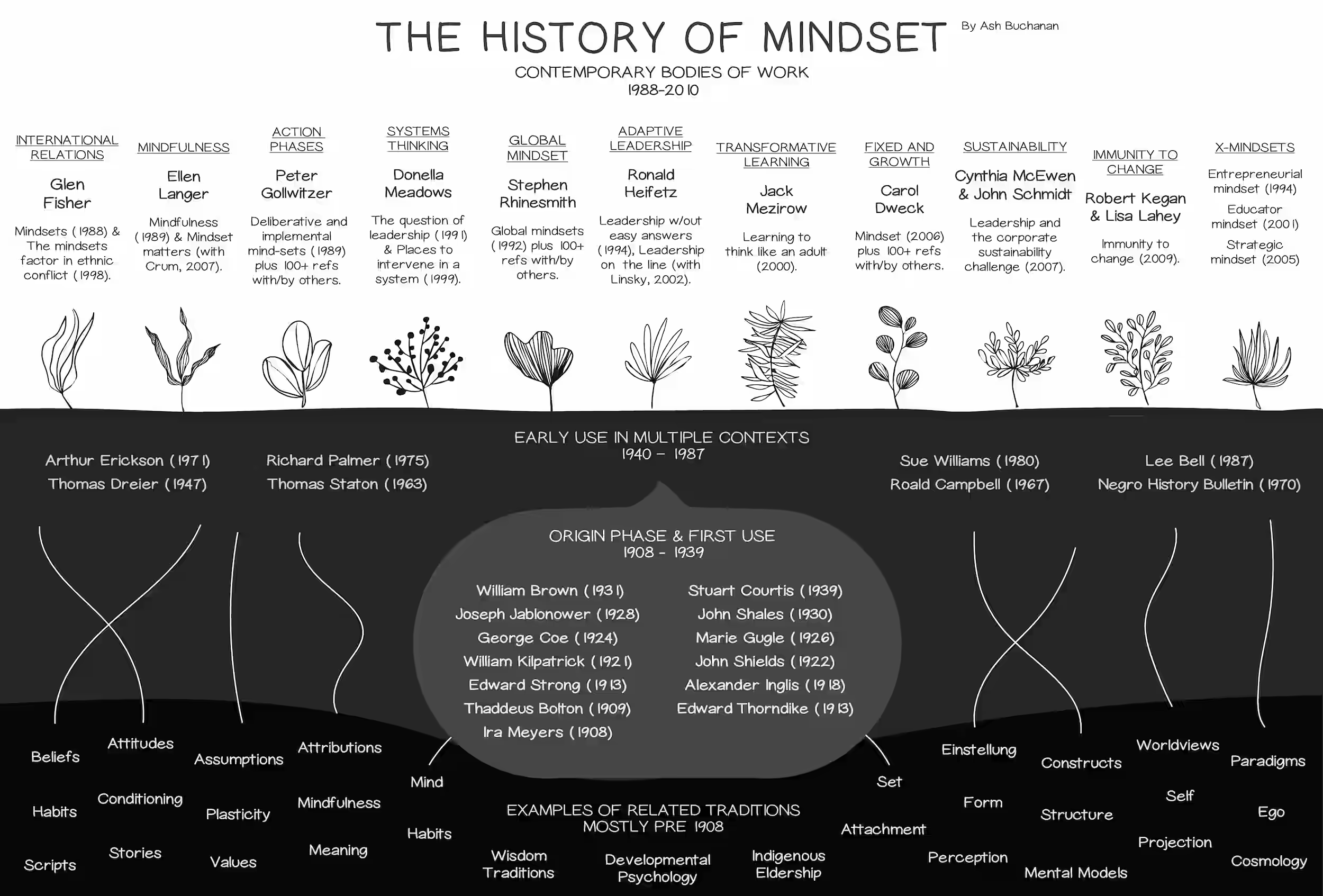
Looking across more than 100 years of research, an expansive picture begins to emerge. The history of mindset is not the history of a single idea or discovery. It is the emergence of multiple traditions, each studying the nature of mindset in a different way.
Mindset has also never had a shared working definition or commonly agreed meaning. Instead, its history is best understood as a collection of diverse voices and perspectives. The view being offered by everyone in the field is much more complete and holistic than the view being offered by any one tradition.
It’s also important to acknowledge this history does not represent a steady progression toward a more refined understanding. In some cases, it may be that the field’s learnings may have narrowed over time. For example, the 1920s approach to mindset, which included the head, heart, body, and soul, could be read as being more holistic than some of the cognitive-only framings that are common in modern society today. This is one reason why understanding the full history of mindset matters: it helps us reclaim those lost dimensions and build a more holistic practice.
Finally, this history is not complete. There is still much work to be done to develop an inclusive and comprehensive account. You are invited to study the history of mindset, and share what you learn, to contribute to an ongoing process of making it more visible.
Mindset isn’t a modern discovery; it’s an over century-old field. Depth of understanding begins by honouring this history as fully as possible.
Ash Buchanan
Frequently Asked Questions
- Who coined the term mind-set? The earliest known usage of the term mind-set was in 1909, in an article by Thaddeus Lincoln Bolton (On the Efficacy of Consciousness). He associates mind-set with a movement of meaning. (Note: Future research may identify earlier historical sources.)
- What is the original meaning of mindset? The word mindset comes from mind (late 12th-century mynd) and set (Old English settan). At its root, it refers to a setting of the mind, that shapes how a person thinks, feels, and wills.
- Why does mindset history matter? This history provides important context for understanding current and emerging ideas. It helps us understand how different perspectives of mindset have evolved over time and across disciplines, and prevents earlier contributions from being overlooked.
- Why has mindset history been misunderstood? There are stories circulating today that mindset is a concept from the 1980s. Such narratives risk portraying mindset as a recent development of Western psychology, and may encourage a kind of historical blindness that unintentionally invisibilises some of the valuable contributions that have been made.
Share this article
About the Author
Ash Buchanan, MAPP, is a mindset scientist, teacher, and bestselling author who led a decade-long research program studying the mindset field as a whole. He offers training, learning partnerships, and project support for people and teams who want to use mindset science to engage complexity and create meaningful change. Ash is the author of five books, including the #1 Amazon bestsellers: Mindset Aware, The Nature of Mindset, and Handbook of Mindset Research. His research appears in Springer Nature, International Journal of Wellbeing, and Middle East Journal of Positive Psychology.
References
Note: You are welcome to quote or reference short passages of this article for personal and educational use, provided attribution and a direct link to this page are given. Reference: Buchanan, A. (2026). The Hidden History of Mindset (It Didn’t Start in the 80s).
Bell, L. (1987). Hearing all our voices. Women’s Studies Quarterly, 15. http://www.jstor.org/stable/40003439
Blank, M., Nicklich, M., Pfeiffer, S., Sauer, S., & Tihlarik, A. (2026). From Academic Theory to Management Jargon: Exploring the Evolution and Ideology of the Concept of Mindset. American Journal of Management, 26(1), 122. https://doi.org/10.33423/7tmfjw02
Bolton, T. L. (1909). On the efficacy of consciousness. The Journal of Philosophy, Psychology and Scientific Methods, 6(16), 421–432. https://doi.org/10.2307/2010890
Brown, W. O. (1931). Racial inequality: Fact or myth. The Journal of Negro History, 16(1), 43–60. https://doi.org/10.2307/2713996
Buchanan, A. (2024). Handbook of Mindset Research. https://www.researchgate.net/publication/384903190_Handbook_of_Mindset_Research
Buchanan, A. (2023). Perspectives: The History of Mindset: A Critical Review. Middle East Journal of Positive Psychology, 9, 79–99. https://www.middleeastjournalofpositivepsychology.org/index.php/mejpp/article/view/166
Campbell, R. F. (1967). Federal-state educational relations. The Phi Delta Kappan, 49(1), 16–20. https://www.jstor.org/stable/20371945
Coe, G. A. (1923). Shifting the national mindset. The World Tomorrow, 42-43. Religious Education. https://doi.org/10.1080/0034408240190510
Courtis, S. A. (1939). Philosophy of education. Brumfield & Brumfield.
Crum, A. J., & Langer, E. J. (2007). Mind-set matters: Exercise and the placebo effect. Psychological Science, 18(2), 165– 171. https://doi.org/10.1111/j.1467-9280.2007.01867.x
Dreier, T. (1947). The religion of a vagabond. Harper & Brothers.
Dweck, C. S. (2006). Mindset: The new psychology of success. Random House.
Dweck, C. S., & Yeager, D. S. (2019). Mindsets: A view from two eras. Perspectives on Psychological Science,14(3), 481–496. https://doi.org/10.1177/1745691618804166
Erickson, A. (1971). Resources for effective innovation. Proceeding conference on cities. Indianapolis. https://www.google.com.au/books/edition/Proceedings/JesHq0Awx6UC?hl=en
French, R. P., II. (2016). The fuzziness of mindsets. International Journal of Organizational Analysis, 24(4), 673-691. https://doi.org/10.1108/IJOA-09-2014-0797
Fisher, G. (1988). Mindsets: The role of culture and perception in international relations. Intercultural Press.
Fisher, G. (1998). The Mindsets Factor in Ethnic Conflict: A Cross-Cultural Agenda. Intercultural Press.
Gollwitzer, P. M., & Kinney, R. F. (1989). Effects of deliberative and implemental mind-sets on illusion of control. Journal of Personality and Social Psychology, 56(4), 531. https://doi.org/10.1037/0022-3514.56.4.531
Gollwitzer, P.M. and Bayer, U.C. (1999). Deliberative versus implemental mindsets in the control of action. In Daul-Process Theories in Social Psychology, Guilford Press, New York.
Goreng Goreng, T. (2018). Tjukurpa Pulka The road to Eldership: How Aboriginal culture creates sacred leaders.
Gugle, M. (1926). Revision of college preparatory mathematics. The Mathematics Teacher, 19(6), 321–328. https://www.jstor.org/stable/27950850
Heifetz, R. (1994). Leadership without easy answers. Harvard University Press.
Hilgartner, S., Bell, R. C., & O’Connor, R. (1982). Nukespeak: Nuclear language, visions, and mindset. Sierra Club Books.
Inglis, A. J. (1918). Principles of secondary education. Houghton Mifflin. https://lccn.loc.gov/18003788
Jablonower, J. (1928). The project method and the socialised reaction. The Mathematics Teacher, 21(8), 431–441. https://doi.org/10.5951/MT.21.8.0431
Kegan, R., & Lahey, L. (2009). Immunity to change. Harvard Business Review Press.
Kilpatrick, W. H. (1925). Mindset and learning. In Foundations of method: Informal talks on teaching. (pp. 66–76). Macmillan. https://doi.org/10.1177/002205742510202415
Krohn, M. (2022). The crucial role of mindsets in innovation efforts. Springer. https://doi.org/10.1007/978-3-658-39970-2
Krohn, M., Hattenberg, D.Y., Krueger, N.F., Herstatt, C. (2024). A Taxonomy of Mindsets: Current Conceptualizations and Future Directions for Mindset-Based Research in Innovation and Entrepreneurship. In: Mikkelsen, K., Wolf, A. (eds) Minds, Brains, and Doxa for Inclusive Entrepreneurship. International Studies in Entrepreneurship, vol 47. Springer, Cham. https://doi.org/10.1007/978-3-031-50164-7_2
Langer, E. J. (1989). Mindfulness. Addison-Wesley.
Lincoln, C., E. (1975). 200 Years of Christian slaveholders. Ebony magazine.
Meadows, D. H. (1991). The question of leadership. The Global Citizen. https://donellameadows.org/archives/the-question-of-leadership-a-good-leader-sets-the-right-goals-gets-things-moving-and-helps-us-discover-that-we-already-know-what-to-do/
Meadows, D. H. (1999). Leverage points: Places to intervene in a system. Sustainability Institute. https://donellameadows.org/archives/leverage-points-places-to-intervene-in-a-system/
McEwen, C. A., & Schmidt, J. D. (2007). Leadership and the corporate sustainability challenge: Mindsets in action.http://dx.doi.org/10.2139/ssrn.1118071
Mezirow, J. (2000). Learning to think like an adult. Learning as transformation: Critical perspectives on a theory in progress, 3-33.
Meyers, I. B. (1908). Field-Work and Nature-Study. Part II. The Pedagogical Aspect. The Elementary School Teacher, 8(6), 316-326.
Negro History Bulletin. (1970). Editorial: Civil rights and white textbooks. Negro History Bulletin, 33(1), 4–5. https://www.jstor.org/stable/24766777
Oxford English Dictionary. (n.d.). Mindset, n.Retrieved July 17, 2026, from https://www.oed.com/dictionary/mindset_n
Palmer, R. E. (1975). Toward a postmodern interpretive self-awareness. The Journal of Religion, 55(3), 313–326. https://doi.org/10.1086/486443
Rhinesmith, S. H. (1992). Global mindsets for global managers. Training & Development, 46(10), 63-69. https://assets.td.org/m/72e87dd1f383ea40/original/Global-Mindsets-Global-Managers.pdf
Shales, J. M. (1930). A study of mind-set in rural and city school children. Journal of Educational Psychology, 21(4), 246–258. https://doi.org/10.1037/h0073401
Shields, J. M. (1922). Moral education in secondary schools. The High School Journal, 5(7), 179–181. https://www.jstor.org/stable/41310140
Staton, T. (1963). What people see and why. Federation of Insurance Counsel Quarterly. https://www.google.com.au/books/edition/Defense_Law_Journal/h8AsAAAAIAAJ?hl=en&gbpv=0
Strong, M. H., & Strong, E. K. (1916). The Nature of Recognition Memory and of the Localization of Recognitions. The American Journal of Psychology, 27(3), 341–362. https://psycnet.apa.org/doi/10.2307/1413103
Thorndike, E. L. (1913). Educational psychology: Psychology of learning. (Vol. 2). Teachers college, Columbia University. https://doi.org/10.1037/13051-000
Warren, H. (1934). Dictionary of Psychology. https://archive.org/details/dictionaryofpsyc00warr_0
Williams, S. (1980). Nature speaks. Off our backs, 10(11), 25–25. https://www.jstor.org/stable/25773414
Yielder, R., Crum, A., Weinman, J., & Petrie, K. J. (2026). Employing illness perceptions and mindsets in health contexts: towards an integrative framework. Health Psychology Review, 20(1), 197-222. https://doi.org/10.1080/17437199.2025.2552244
[a] This entry reflects the author’s own body of work. It is offered as one perspective from a fellow traveller, and is shared to sit alongside all other perspectives.
.