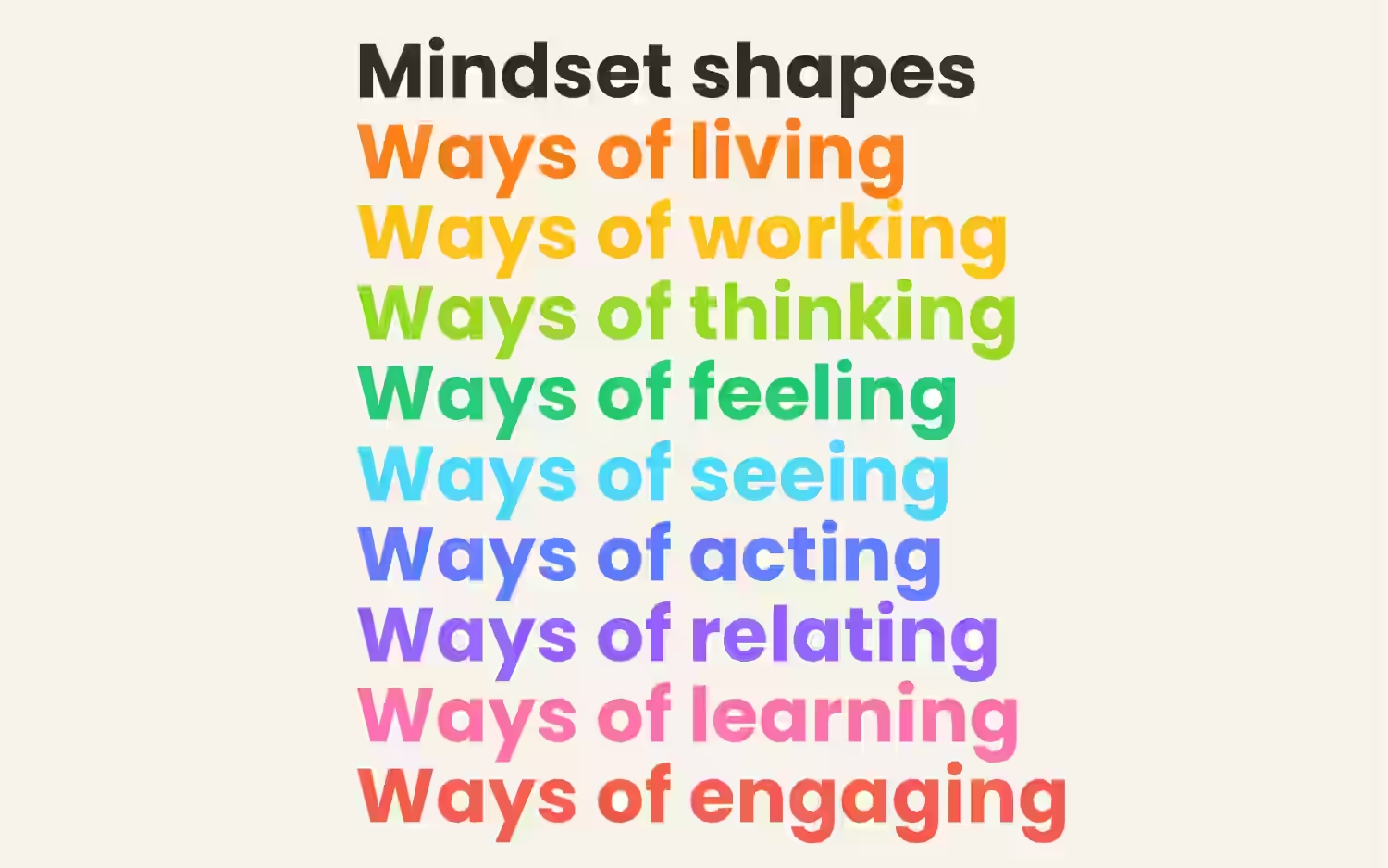
Mindset shapes the lives we lead, the actions we take, and the future possibilities of the world we create. It influences how we think and feel, how we see and make meaning, how we learn, and how we participate in societies and the living world. Mindset is also a powerful leverage point for systems change. If we want to support new ways of living and working, and co-create new economies and new approaches to education, knowing our mindsets, and being able to shift them, is an essential capability.
Given this importance of mindset, it’s vital you have access to a comprehensive view of the science. To support this, the following article presents an emerging view of the foundational principles of mindset psychology. I developed these principles as part of a decade-long, field-wide study of 40 theories, 100 definitions, and 1,800 types. They are informed by the collective knowing of many Western contributors, including Glen Fisher, Donella Meadows, and Alia Crum, alongside perspectives coming from Eastern, Indigenous, and wisdom traditions (see A New and Ancient Science of Mindset for details). Together, they form the foundations of an early-stage mindset theory that now invites field-wide engagement and empirical study.
These mindset principles are ancient because they are based on the collective wisdom of the field. They’re new because they invite new generation approaches to mindset that are never set, but always evolving based on what is possible now.
These principles can help you become more aware of your own mindset, recognise how it shapes your perceptions and actions, and work with it more intentionally. They can help you relate more skillfully to the diverse mindsets you meet in the people and world around you. These principles are also being offered to help expand the global conversation around mindset, and support the development of a mindset science that is equipped to meet the challenges of the twenty-first century.
In this article, we’ll unpack the first 8 principles. If you’d like to explore the full set of 16 principles, check out the free book: A New and Ancient Science of Mindset.
The Principles of Mindset
Principle 1. Mindset is a Stable and Malleable Pattern
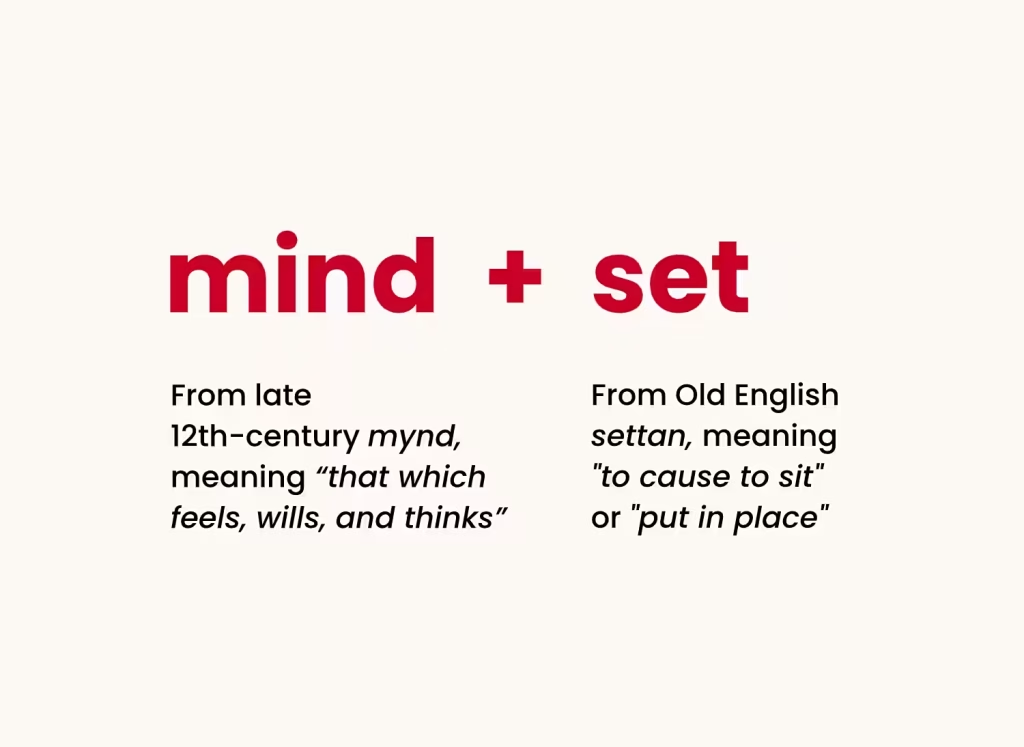
The English word mindset (derived from late 12th-century mynd and the Old English settan, “set”) emerged around the 1900s. At its heart, a mindset is a pattern or setting of the mind, that readies you toward a certain way of perceiving and behaving. It is inherently stable and malleable, meaning, it carries a degree of “setness”, and yet it is malleable enough to evolve. This means, while you have a mindset, it’s not inherently set in stone. It can learn and grow.
Principle 2. Mindset is a “Set” of Qualities
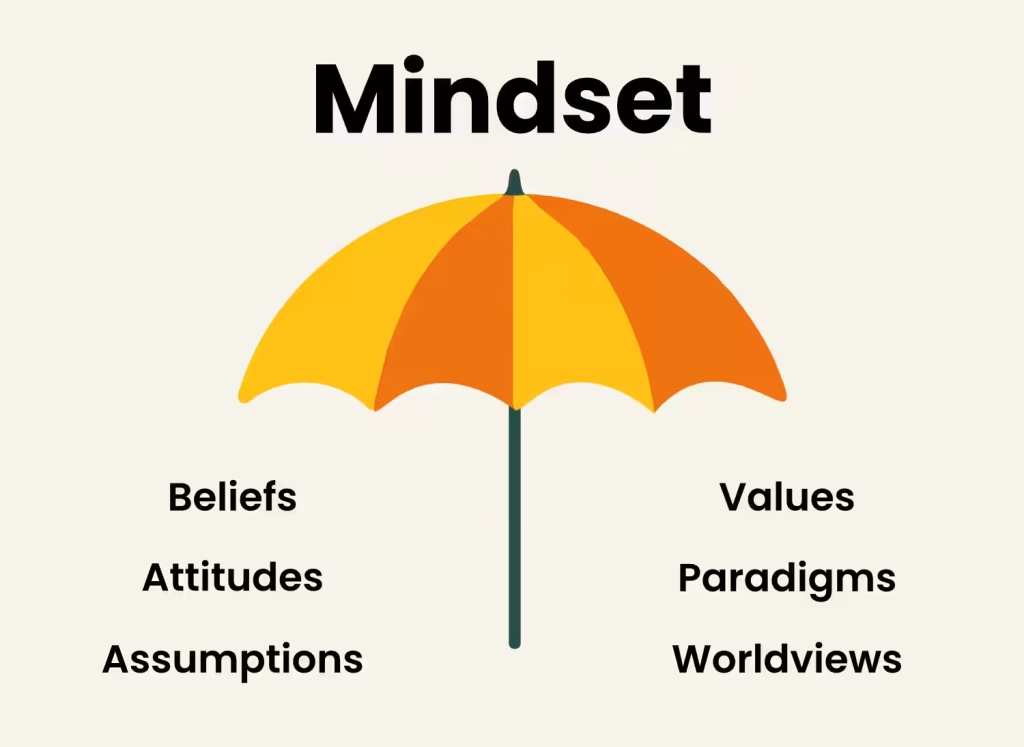
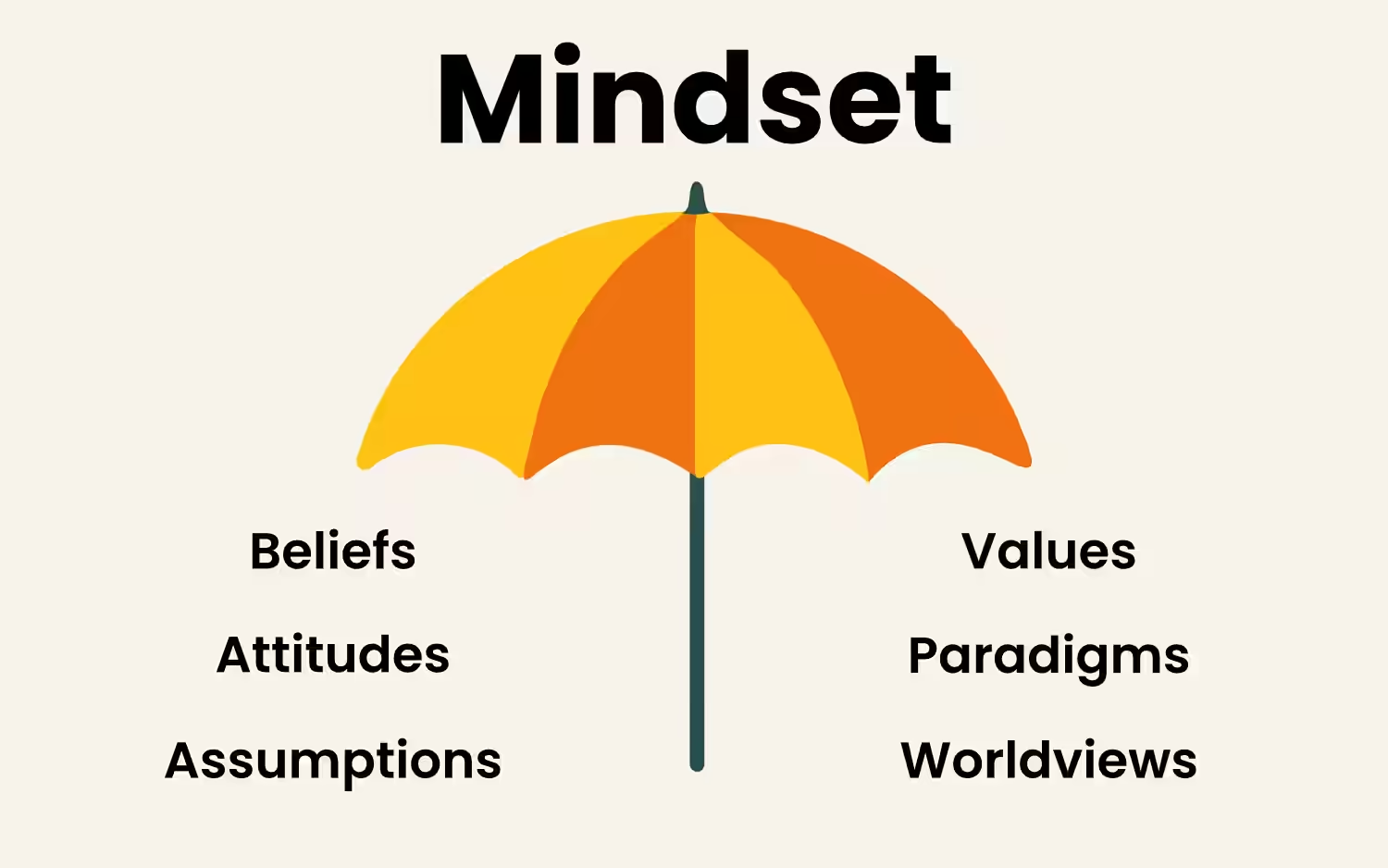
A mind-set consists of a “set” or constellation of qualities in the “mind”. The big 6 include:
- Beliefs about everything, including ability, intelligence, wellbeing, money, and the nature of reality
- Attitudes towards self, people, nature, events, and tasks.
- Assumptions that shape how you form opinions and make decisions.
- Values of what is important and matters to you.
- Paradigms or models you use to make sense of how some part of the world works.
- Worldviews that influence how you see the world and your place in it.
Recognising mindset as a set of qualities gives you a more complete understanding of how mindset is part of your life.
Principle 3. Mindset is Embodied and Relational
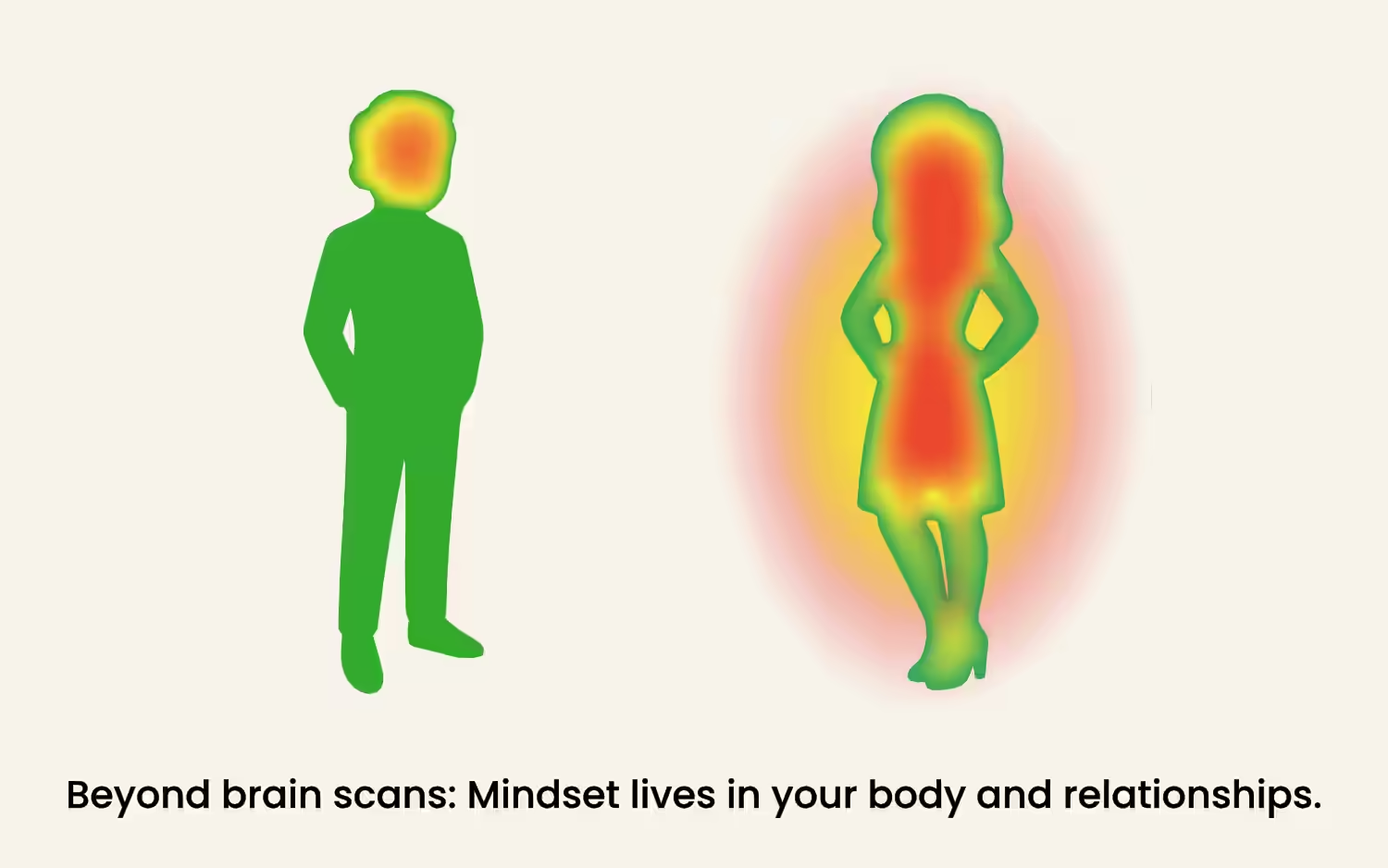
While mindset has a cognitive dimension, the science of mindset suggests it can more broadly be understood as an embodied and relational quality that exists within and between people, and is ecological in nature. From this perspective, working with mindset involves more than changing thoughts. It means engaging your ways of thinking, feeling, embodying, and relating as an integrated whole.
Principle 4. Mindset Develops via The Process of Mindsetgenesis
The word mindsetgenesis is composed of the English word mindset, and the Greek word genesis, which means origin or creation. The basics of mindsetgenesis are that as you have life experiences (including personal, social, ecological, and so on), those experiences shape how your process of mind emerges, which in turn shapes the mindset patterns you develop. Understood this way, your mindset is like an intricate tapestry that has been woven through countless life experiences, and can be rewoven in the present.
Principle 5. An Ecology of Mindset
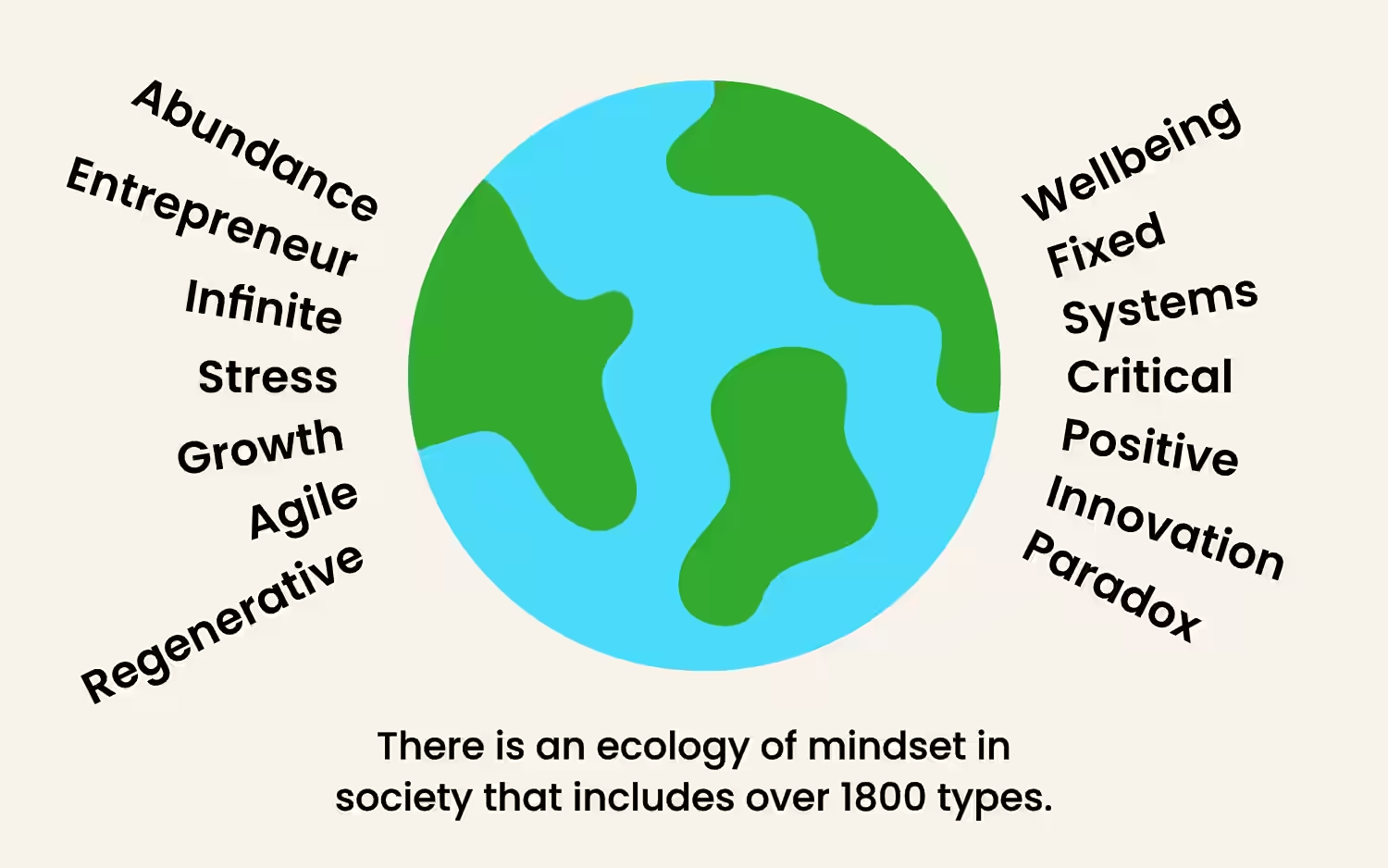
Mindsets are not just individual qualities, they are also collective and intergenerational. There is a larger ecology of mindset that exists in human society that everyone is participating in. This ecology of mindset includes the totality of the beliefs, attitudes, values, paradigms, and worldviews that are being passed on from person to person and from generation to generation. It also includes over 1800 different mindset types. How you participate in this ecology shapes what mindsets you inherit and help shape for others.
Mindsets aren’t just personal; they are collective and intergenerational. There is an ecology of mindset that includes over 1,800 types that are being passed on from person to person and generation to generation.
Principle 6. Mind, Mindset, and Mindfulness Are Interconnected
Within human consciousness, mind, mindset, and mindfulness belong to an interconnected system, where:
- Mind is an embodied and relational process.
- Mindset is an embodied and relational pattern.
- Mindfulness is an embodied and relational presence.
Through mindfulness, you can observe both your mind and mindset directly. This awareness enables you to see how well they align with reality. Mindfulness also creates the conditions for them to transform naturally, like a flower bud gradually opening in the light of the sun.
Principle 7. Mindset has Conscious and Unconscious Parts
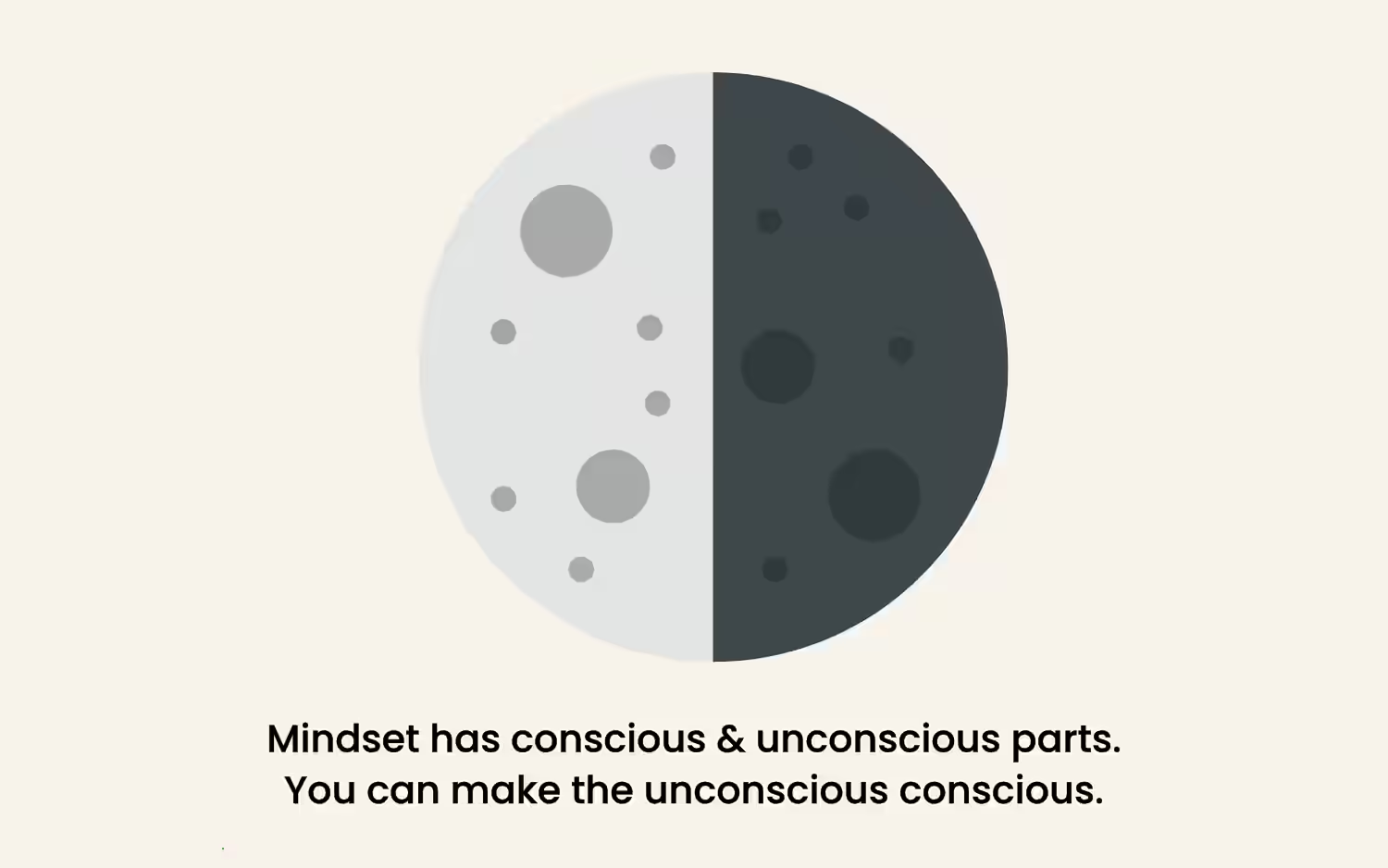
Not all aspects of your mindset are visible to you. Some parts are conscious, meaning you can notice and reflect on them. Other parts operate in the dark, quietly influencing how you think and feel, and see and act, without your awareness. These hidden patterns can influence your life until they become visible. By making the unconscious conscious, you gain greater choice, and the ability to intentionally change your mindset.
Principle 8. Mindset Can Be Controlled and It Can Also Be Set Free
There are two basic ways that a mindset can function. One is natural and emergent, when it functions in alignment with a person’s essence (their authentic nature) and what is essential (what matters most right now). The other is controlled and imposed, which is when a mindset is being forced to function in a particular way. Because your mindset is like a living pattern, controlling its functioning risks diminishing its authentic expression.
Principles 9-16
The next eight principles explore how mindset functions, including how it can actively shape how you see and act, and the different ways it can shift. These principles build on the foundations introduced here and deserve more than a brief summary. So rather than compressing them into a few lines, I’ve unpacked them properly in the book: A New and Ancient Science of Mindset (available as a free PDF download).
Mindset Principles in Action
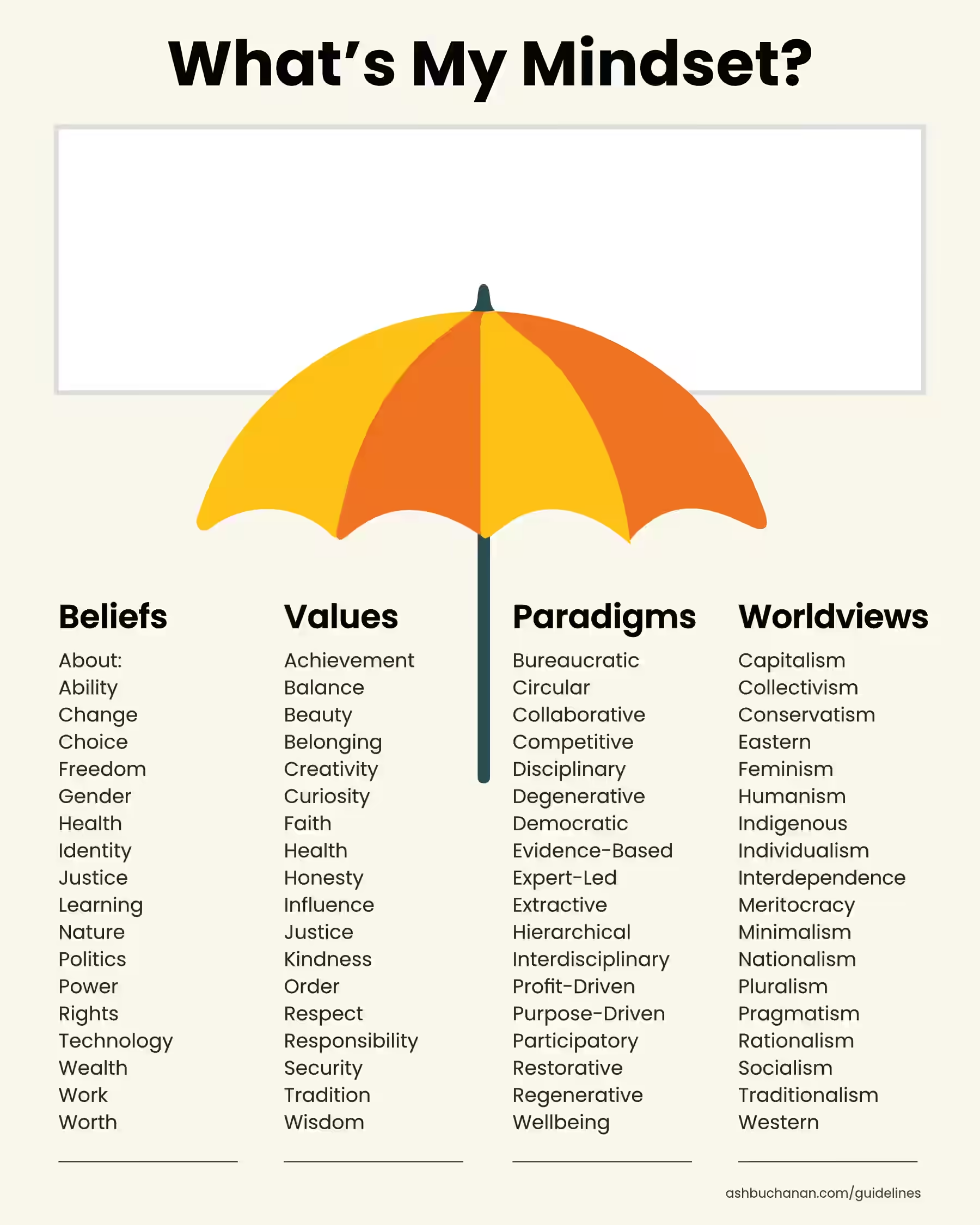
When put into practice, these principles can help you live what I call a mindset-aware life. This means you are becoming increasingly aware of the mindset you embody in the here and now. You are more able to see the set of beliefs, values, paradigms, and worldviews that shape how you see, learn, and act. You have a growing understanding of where your mindset has come from, and how it belongs to the ecology of mindset that exists in society. You can increasingly describe your mindset in your own words, and see more clearly how it shapes what is possible in your life and the world. With this awareness comes greater choice. Rather than being shaped by inherited or unconscious patterns, you now have greater choice to take responsibility for your mindset and shift it when you need to.
To help make these ideas more concrete, let’s walk through an example together. For years, I used to believe that setting learning goals was a smart way to unlock my fullest potential. I loved them. I’d strive to achieve my goals with effort, willpower, and a growth mindset. Often, they worked. Then one day, while I was setting a new goal for my career, a moment of insight stopped me: “Huh. Is setting this goal predetermining my future? Could it actually be narrowing rather than unlocking my true potential? For the first time, I could see the belief I was holding about goal setting, and could now examine it, question it, and explore what else might serve better. This awareness gave me a choice: to keep setting goals the old way, or try something new. I chose a new way: to hold my goals a little more lightly, and leave space for my life and work to unfold more emergently, based on what’s possible in the present.
This is what mindset awareness looks like in practice. It lives in those small pauses, in those small moments of noticing, where you can find the space to choose how you respond to the mindsets you meet. Those moments create the space for choice. Over time, you may find yourself becoming less governed by unconscious patterns and more able to respond with flexibility and intention. Possibilities that were once hidden begin to come into view. As your relationship with your own mindset changes, so too does the way you engage with other people and the wider world.
Mindset awareness lives in those small pauses, the moments of noticing where you can find the space to choose how you respond, rather than being governed by inherited or unconscious patterns.
If you would like to delve deeper, there are sixteen micro-practices (one per principle) provided in A New and Ancient Science of Mindset. These micro-practices are designed to be quick (taking just 1-5 minutes), accessible (requiring no special equipment), and impactful (directly connecting the principles to your daily experience).
Potential Pitfalls of Mindset Work
A Belief-Only Approach
It can be tempting to reduce the whole of mindset down to beliefs alone. Yet, a field-wide view suggests mindset is a whole constellation of beliefs, attitudes, paradigms, and worldviews. Changing one belief while overlooking the rest may limit how far that change can go. Meaningful transformation tends to require engaging the whole constellation.
A Head-Only Approach
While trying to “think your way” into a new mindset may feel productive, it often has limited impact on its own. You can change your mental models and cognitive frameworks all day and still notice old patterns showing up in your body and relationships. Lasting change tends to involve the emotional, embodied, and relational dimensions of mindset, alongside the cognitive ones.
Making Your Mindset Fit Within a Predefined Box
With thousands of mindset types on offer, it can be common to feel pressure to adopt one and make it your own. But mindset, as understood through these principles, is a living, ever-changing pattern, not a pre-knowable quality. Trying to fit your mindset into someone else’s category can mean living by borrowed beliefs and values rather than your own. Allowing your mindset to develop authentically, rather than conforming to a predefined type, can support more genuine change.
Practical Takeaway
Twenty-first century challenges call for a mindset science that is based on the collective knowing of the entire field.
Ash Buchanan
The influence of your mindset runs deep. It’s hard to overstate its profound reach and impact. Mindset shapes so much, your perceptions, your decisions, your relationships, whether you are aware of it or not. What you can do is come to know it as completely as possible, so that you can work with it more skilfully. These principles, informed by the collective knowing of the mindset sciences, are designed to help you meet your mindset with greater clarity, and refine your ability to work with it more intentionally when you choose.
Frequently Asked Questions
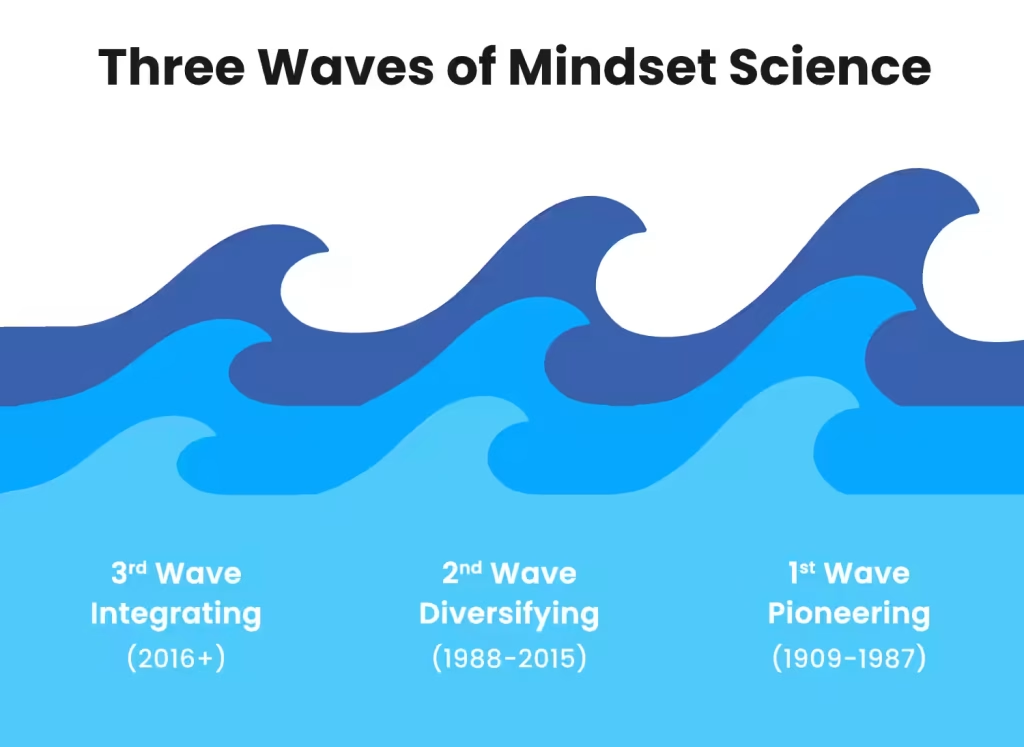
- What is mindset science? The science of mindset is the study of how mindset shapes our lives and the world. While it is sometimes narrowed in popular usage to one strand of research, the field itself is broad, built across diverse traditions. In its most complete sense, it is a study of the mindset sciences as a whole. The principles presented in this article are one view of the fields collective knowing, offered for ongoing dialogue and empirical testing as part of Third Wave Mindset Science.
- What’s the difference between mindset and mindfulness? Mindset is a pattern that you embody; mindfulness is the present-moment awareness that lets you notice and shift that pattern.
- Can you change your mindset? Yes, mindsets are both stable and malleable by nature. They can be supported to shift in an organic way that is aligned with what is essential in the present, or controlled to shift by following a predetermined path. But things can happen that can cause a mindset to lose its malleability, and require skill and care to engage.
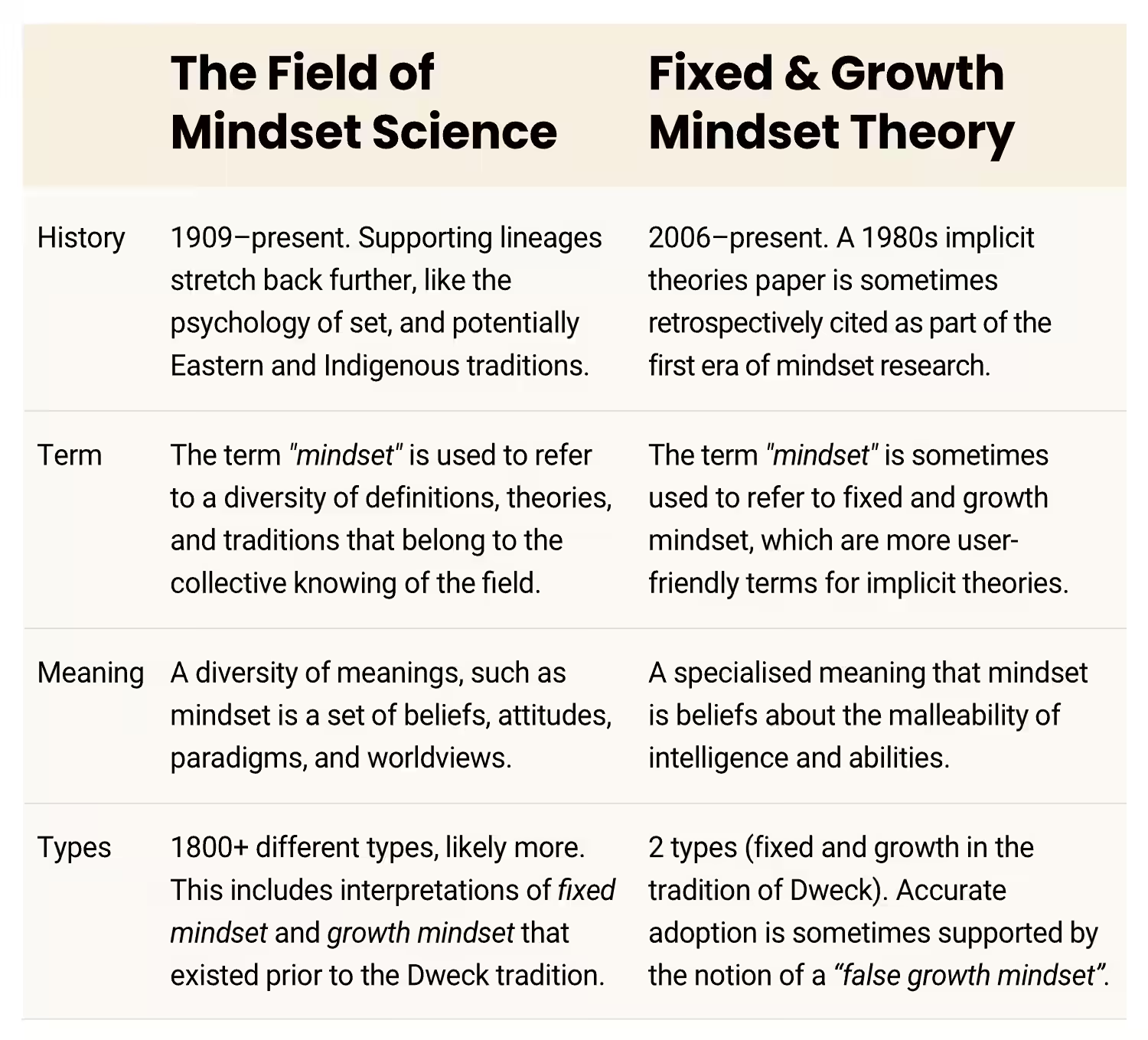
- How do the mindset principles differ from growth vs. fixed mindset? Fixed and growth mindset is a specialised theory that focuses on beliefs about intelligence and ability. These principles are based on a field-wide study of over 40 theories, 100 definitions, and 1,800 types to provide a holistic view of mindset. As such, these principles are in conversation with the theories proposed by William Heard Kilpatrick, Ellen Langer, Peter Gollwitzer, Carol Dweck, Robert Kegan, Lisa Lahey, Robert P. French II, Malte Krohn, and more.
Share this article
About the Author
Ash Buchanan, MAPP, is a mindset scientist, teacher, and bestselling author who led a decade-long research program studying the mindset field as a whole. He offers training, learning partnerships, and project support for people and teams who want to use mindset science to engage complexity and create meaningful change. Ash is the author of five books, including the #1 Amazon bestsellers: Mindset Aware, The Nature of Mindset, and Handbook of Mindset Research. His research appears in Springer Nature, International Journal of Wellbeing, and Middle East Journal of Positive Psychology.
Disclaimer
This content is for educational or informational purposes only. It is not intended as a therapeutic intervention. If you choose to try it in your own life or work, you do so at your own discretion and responsibility. If you are unsure whether you should try it, please consult your doctor or therapist first.
References
Note: You are welcome to quote or reference short passages of this article for personal and educational use, provided attribution and a direct link to this page are given. Reference: Buchanan, A. (2026). The Science of Mindset: Foundational Principles.
Buchanan, A. (2024). Handbook of Mindset Research. https://www.researchgate.net/publication/384903190_Handbook_of_Mindset_Research
Buchanan, A. (2023). Perspectives: The History of Mindset: A Critical Review. Middle East Journal of Positive Psychology, 9, 79–99. https://www.middleeastjournalofpositivepsychology.org/index.php/mejpp/article/view/166
Buchanan, A. (2026). A New and Ancient Science of Mindset. https://www.amazon.com.au/New-Ancient-Science-Mindset/dp/1763671267/
Crum, A. J., Salovey, P., & Achor, S. (2013). Rethinking stress: the role of mindsets in determining the stress response. Journal of personality and social psychology, 104(4), 716. https://doi.org/10.1037/a0031201
Dweck, C. S. (2006). Mindset: The new psychology of success. Random House.
Fisher, G. (1988). Mindsets: The role of culture and perception in international relations. Intercultural Press.
French, R. P., II. (2016). The fuzziness of mindsets. International Journal of Organizational Analysis, 24(4), 673-691. https://doi.org/10.1108/IJOA-09-2014-0797
Gollwitzer, P. M., & Kinney, R. F. (1989). Effects of deliberative and implemental mind-sets on illusion of control. Journal of Personality and Social Psychology, 56(4), 531. https://doi.org/10.1037/0022-3514.56.4.531
Kegan, R., & Lahey, L. (2009). Immunity to change. Harvard Business Review Press.
Kilpatrick, W. H. (1925). Mindset and learning. In Foundations of method: Informal talks on teaching. (pp. 66–76). Macmillan. https://doi.org/10.1177/002205742510202415
Krohn, M. (2022). The crucial role of mindsets in innovation efforts. Springer. https://doi.org/10.1007/978-3-658-39970-2
Langer, E. J. (1989). Mindfulness. Addison-Wesley.
Meadows, D. H. (1999). Leverage points: Places to intervene in a system. Sustainability Institute. https://donellameadows.org/archives/leverage-points-places-to-intervene-in-a-system/
Mindset, n. (n.d.). In Oxford English Dictionary. Retrieved July 17, 2026, from https://www.oed.com/dictionary/mindset_n
[a] This entry reflects the author’s own body of work. It is offered as one perspective from a fellow traveller, and is shared to sit alongside all other perspectives.