A fixed and growth mindset bias occurs when Carol Dweck’s fixed versus growth framework is treated as foundational to mindset, while other valuable voices and perspectives from the wider field are overlooked or given less attention.
Here is an experiment you can try for yourself right now.
Open a new tab on your browser. Search “mindset.” Look at a few of the top ten results. Next, fire up your three favorite AI tools and ask each of them to define what a mindset is. If you’re feeling especially keen, you may like to check out a range of the most highly cited books and peer-review papers on the topic of mindset.
Now pause. Look at what you’ve got in front of you. Notice anything?
I’ve been running this exact experiment, in one form or another, for many years. I’ve been trying to study the entire mindset field, as fully as possible. And I’ve found this surprisingly hard to do, for a potential reason I think we need to name and talk about. I’m calling it the fixed and growth mindset bias.
What is a fixed and growth mindset bias?
A fixed and growth mindset bias occurs when Carol Dweck‘s fixed versus growth framework is treated as foundational to mindset, while other valuable voices and perspectives from the wider mindset field are overlooked or given less attention. This bias may occur through patterns in search results, AI-generated answers, academic papers, educational materials, and other systems that shape what information people encounter and come to understand as important.
In my experience, this bias may be contributing to an information landscape that is skewed towards a popular perspective, one that may make it difficult for anyone to access a complete picture of what the mindset field has collectively learned. In such a skewed landscape, it can be genuinely difficult to cut through the noise and access all voices and perspectives on the topic. It’s possible someone setting out to learn about mindset may come away with no idea a wider field exists at all. In turn, this bias might be contributing to a situation where many people all over the world now attribute the meaning of mindset to fixed and growth mindset.
Why might this bias be a problem?
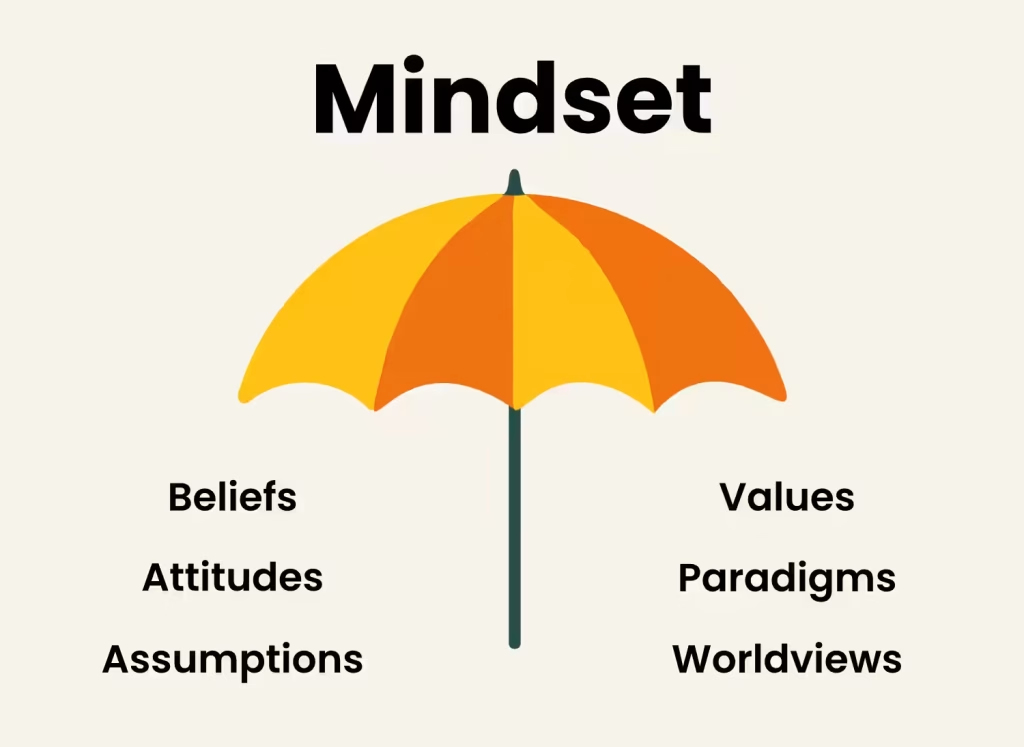
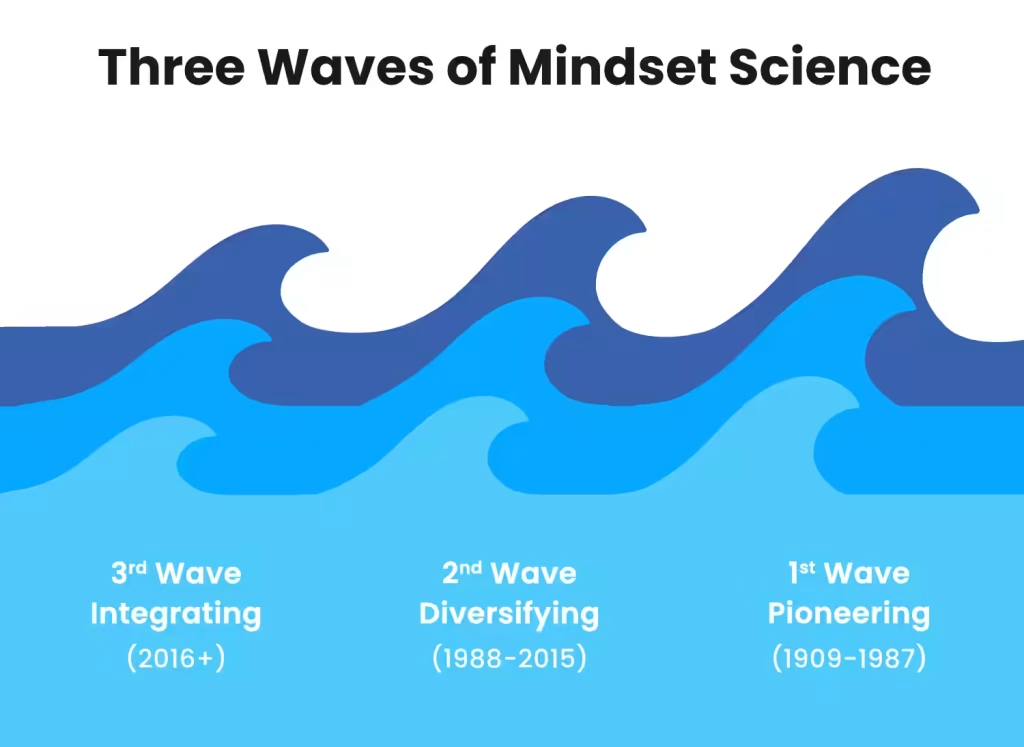
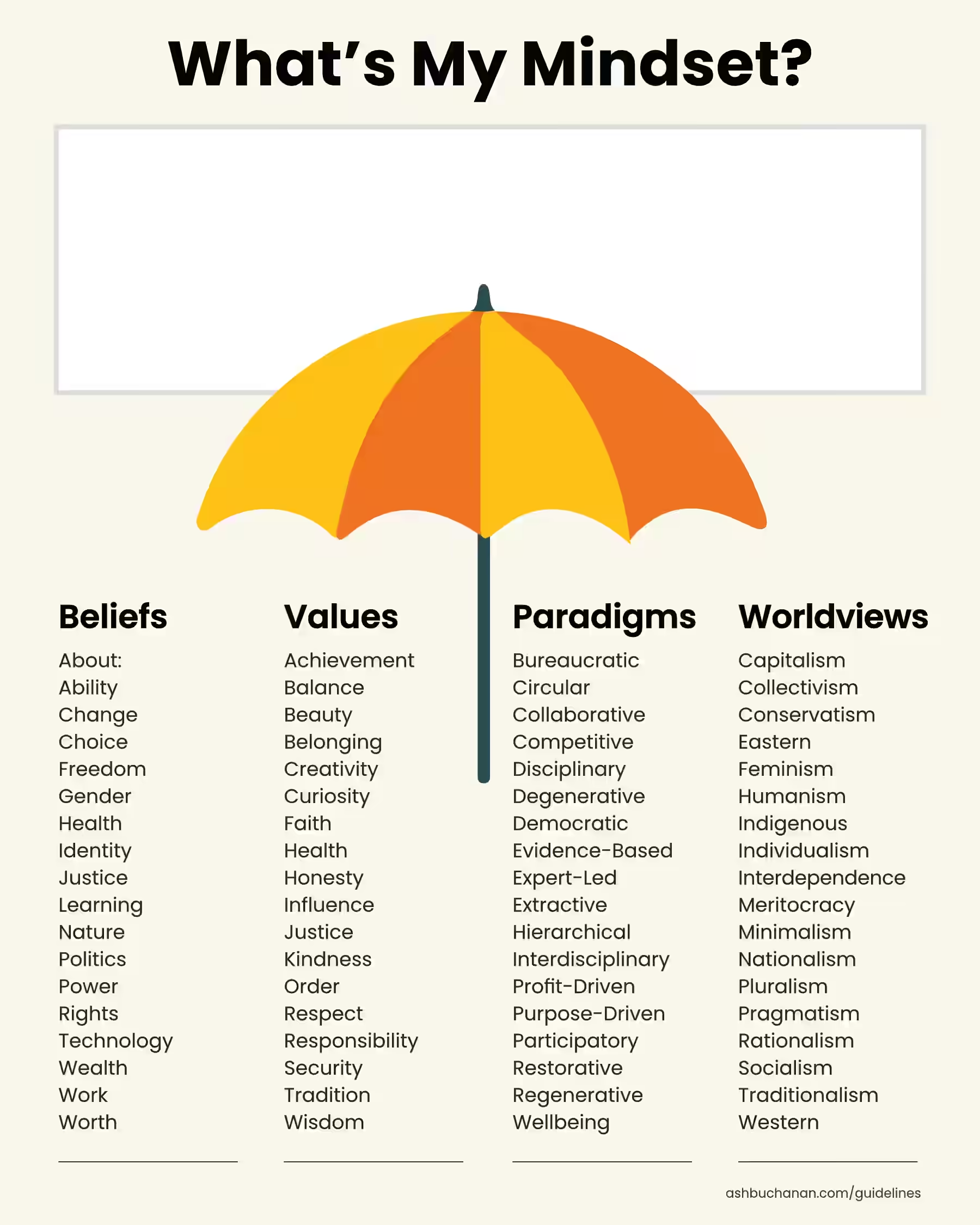
Very simply, because our understanding of mindset is so much more expansive than a single theory. For example, fixed and growth mindset emerged as a mindset theory in 2006 when decades-old research into implicit theories of intelligence was given a new, more user-friendly name. Whereas the wider mindset fields origins can be traced back to 1909, perhaps earlier. Additionally, fixed and growth mindset theory defines the term specifically as beliefs about the malleability of intelligence and ability, and categorises mindset into just 2 types. In contrast, the broader field of mindset science describes mindset as a set of beliefs, attitudes, paradigms, and worldviews, that includes over 1,800 named types.
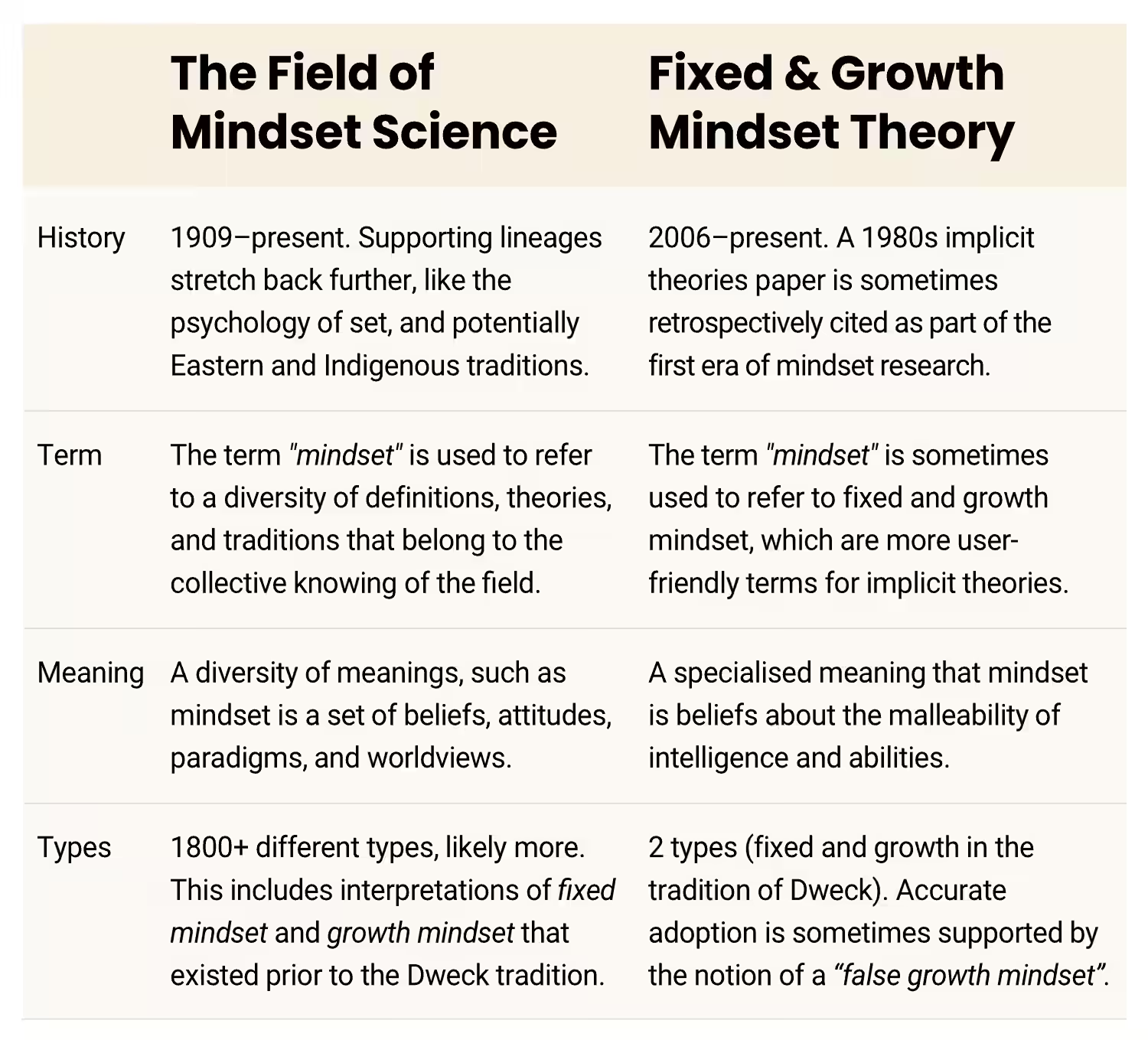
To help illustrate how strange this situation is, consider a parallel with the field of emotions. Search “what are emotions?”, ask an LLM, or open a peer-reviewed paper, and you won’t get a chorus of confident answers saying “there are two emotions: happiness and sadness,” based on a single theory from the last twenty years. You’ll get a wide range of perspectives, diverse theories, and historical debates sitting alongside each other. Yet ask those same systems and the literature “what is mindset?” and they often converge on one answer, even though an abundance of broader perspectives is sitting there, right now, in the wider historical record.
Imagine searching “what are emotions?” and getting a confident response that there are two foundational ones: happiness and sadness. Yet, search for “what is mindset?” and it’s common to hear that mindsets are either fixed or growth.
As an interesting side note, emotions science did historically suffer from similar biases in the past. Yet, the field of emotions has successfully expanded to embrace more diverse perspectives, suggesting that change is possible.
There is also a not-so-subtle irony at play here, one that sits at the very heart of the theory we’re exploring. A genuine growth mindset wouldn’t centre one framework as the primary meaning of mindset. It would embrace a learn-it-all attitude and explore what mindset means from the perspective of the entire mindset field. Which means any information that exhibits a fixed and growth bias may actually be reinforcing a fixed mindset about what mindset is.
One of the great untold stories?
As such, I think it’s important we name this potential bias, and ask: how widely does it exist and what implications might it have for how people learn about mindset. How much does a fixed and growth mindset bias show up in schools, such as in mindset posters on classroom walls and in the wider education curriculum? How frequently does it appear in professional learning programs and workshops, and in how teams approach mindset at work? And what are the implications if search algorithms, LLM answers, and some of the most highly-cited literature in the mindset sciences, only tell part of the story.
I’ve spent the last decade exploring what lies beyond this potential bias, by engaging in the expansive work of studying the wider mindset field. And what I’ve found, again and again, is a field that is extraordinarily rich, deeply layered, and full of ideas that predate, complicate, and go well beyond the version most of us were taught. Fixed and growth theory is genuinely useful, and I am not here to challenge that. But it is one piece of a much larger puzzle, not the whole picture. Given how hidden this larger picture is, I’ve grown increasingly convinced that mindset, the whole story of it, might be one of the great untold stories of modern science.
If it does happen that there is a fixed and growth mindset bias, then it raises some pretty big questions. Such as:
- Do mindset textbooks need to be rewritten to more accurately represent the full scope of mindset science?
- Do peer-review processes themselves need to be reviewed to break patterns that may have allowed broader perspectives to be overlooked?
- Do search engines and LLMs need systematic retraining to address the potential reinforcement of echo chamber effects and provide more complete answers?
I don’t have answers to these questions. But I think they are important questions for us to explore together.
Also, please don’t take my word for the existence of this bias. Run the experiment yourself. Search the web. Ask your favourite AI chatbot. Read the peer reviewed papers. See what you find.
Ultimately, I raise this potential bias because it is my dream to support the co-creation of a mindset science that is based on all the evidence, and is practical for meeting the challenges of the 21st century. It’s an invitation to deepen our shared understanding, with a learn-it-all attitude, so that we have greater access to the collective knowing of the whole mindset field.
Share this article
About the Author
Ash Buchanan, MAPP, is a mindset scientist, teacher, and bestselling author who led a decade-long research program studying the mindset field as a whole. He offers training, learning partnerships, and project support for people and teams who want to use mindset science to engage complexity and create meaningful change. Ash is the author of five books, including the #1 Amazon bestsellers: Mindset Aware, The Nature of Mindset, and Handbook of Mindset Research. His research appears in Springer Nature, International Journal of Wellbeing, and Middle East Journal of Positive Psychology.
References
Note: You are welcome to quote or reference short passages of this article for personal and educational use, provided attribution and a direct link to this page are given. Reference: Does Mindset Have a Fixed and Growth Mindset Bias?
Bolton, T. L. (1909). On the efficacy of consciousness. The Journal of Philosophy, Psychology and Scientific Methods, 6(16), 421–432. https://doi.org/10.2307/2010890
Buchanan, A. (2023). Perspectives: The History of Mindset: A Critical Review. Middle East Journal of Positive Psychology, 9, 79–99. https://www.middleeastjournalofpositivepsychology.org/index.php/mejpp/article/view/166
Buchanan, A. (2024). Handbook of Mindset Research. https://www.researchgate.net/publication/384903190_Handbook_of_Mindset_Research
Dweck, C. S. (2006). Mindset: The new psychology of success. Random House.
Dweck, C. S., & Yeager, D. S. (2019). Mindsets: A view from two eras. Perspectives on Psychological Science,14(3), 481–496. https://doi.org/10.1177/1745691618804166
Fisher, G. (1988). Mindsets: The role of culture and perception in international relations. Intercultural Press.
Kaufman, S. B., & Dweck, C. (2020). The Latest Science of Growth Mindset. Host: “I’m wondering, when did the shift from entity and incremental become fixed versus growth.” Dweck: “That was when I wrote the book, Mindset. I realised nobody can remember entity and incremental. … So, when I came to write the book Mindset, I said, well, I have to find some more user-friendly terms.” (6:19). The Psychology Podcast. https://www.youtube.com/watch?v=WUFbjIFm3SE
Kegan, R., & Lahey, L. (2009). Immunity to change. Harvard Business Review Press.
Kilpatrick, W. H. (1925). Mindset and learning. In Foundations of method: Informal talks on teaching. (pp. 66–76). Macmillan. https://doi.org/10.1177/002205742510202415
Meadows, D. H. (1999). Leverage points: Places to intervene in a system. Sustainability Institute. https://donellameadows.org/archives/leverage-points-places-to-intervene-in-a-system/ Oatley, K., Keltner, D., & Jenkins, J. M. (2006). Understanding emotions. Blackwell publishing