The Chief Mindset Officer (CMO) is a senior leader responsible for an organisation’s mindset strategy. Their role is to work alongside people and leaders, to help everyone do their best work while contributing to the ongoing evolution of how a business thinks, works, learns, and responds to an increasingly complex and changing world.
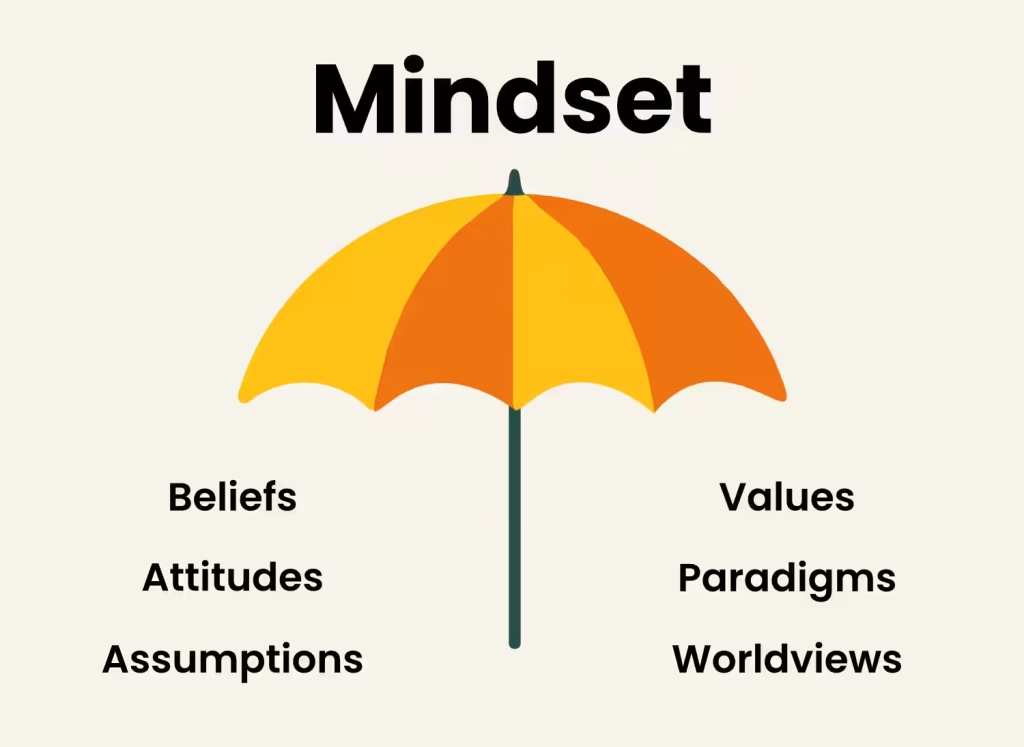
Every organisation is shaped by the mindsets of its people. The ecology of beliefs, attitudes, values, paradigms and worldviews held across a workforce influence how a business interprets challenges, make decisions, approach opportunities, respond to change, and envision what is possible. Yet, while organisations invest significantly in strategy, leadership, culture, wellbeing, and innovation, mindset is rarely recognised as a distinct professional function with dedicated expertise, strategic oversight, and ongoing responsibility.
The Chief Mindset Officer establishes this often-missing executive function. Just as a Chief Financial Officer is responsible for an organisation’s financial strategy, and a Chief People Officer leads its people strategy, a Chief Mindset Officer brings specialist expertise in mindset science to business strategy, development, and transformation. The role is responsible for using evidence-based, data-driven insights to support mindset shifts that strengthen business performance, while also identifying and mitigating mindset-related risks.
Why do companies need a CMO?
The age of AI is accelerating a need for mindset-related professionals.
The world is changing fast. Organisations are increasingly facing situations where uncertainty is high, the stakes are significant, and the path forward is unclear. In times of great complexity, if a business is unable to shift their mindset and their way of working, they will be left behind. These times require the ongoing creation of new ways of seeing, thinking, and working. Very practically, they require people and teams who are able to shift their mindsets as a core part of their daily work, whether they’re kicking off a new project, offering a service, or leading a major transformation
Consider, for example, a company reimagining the future of its work in the age of AI. While it’s essential to have people leading the technological and organisational development aspects of such an initiative, it’s equally important to have someone providing strategic leadership for the mindset dimensions. Without this leadership, the organisation may struggle to realise its full potential, and may even end up heading in the wrong direction.
What does a Chief Mindset Officer do?
The specific responsibilities would depend on the organisation. Some potential areas of focus could include:
- Provide Strategic Mindset Leadership: Develop and lead the organisation’s mindset strategy, aligning leadership, culture, and ways of working to deliver current priorities while building capacity for the future.
- Lead Mindset Shifts and Paradigm Shifts: Help people and teams move through the mindset shifts they need to unlock new possibilities for performance, innovation, and change.
- Build organisational capacity: Strengthen people’s capacity to grow through complexity, work across difference, embrace uncertainty, and continually develop new ways of working.
- Support leadership and culture: Help leaders understand how their own mindsets influence decisions, relationships, workplace dynamics and organisational performance.
- Develop new generation skills: Help people develop skills like mindset literacy and mindset-aware leadership, so they can take greater responsibility for the mindsets they embody and share.
- Measurement and reporting: Make mindset more visible through assessment, research, and reporting, identifying where it is flourishing and where greater development is needed.
Importantly, a Chief Mindset Officer would collaborate with the CEO, people and culture, strategy, transformation and other executive functions, bringing a mindset perspective to the organisation’s most important challenges and opportunities.
What if you can’t afford a Chief Mindset Officer?
Not every organisation needs to establish a new executive position dedicated to mindset. But that doesn’t mean mindset should be left unmanaged.
There are several ways to begin building this capability. The Mindset Jobs Report: New Careers for the 21st Century explores a range of potential roles and approaches. Here are a few options to consider:
- Appoint a mindset manager or lead: Create a new leadership role that can bring a mindset perspective to organisational priorities.
- Engage a mindset adviser or transformation partner: Bring in an external mindset professional to assess organisational needs, advise leaders, and facilitate important mindset shifts.
- Establish a mindset working group: Create a cross-functional team to explore mindset challenges and opportunities across the organisation.
- Integrate mindset into leadership development: Equip leaders with the skills to recognise, understand and work more effectively with the mindsets they embody and share.
The important thing is to move beyond treating mindset as an occasional conversation or isolated training topic, and begin focusing on it as a critical organisational capability.
Does your company need a Chief Mindset Officer?
If you can see a need for greater mindset capability in your organisation or community, it may be time to establish a dedicated executive function.
If you’re interested in exploring what a Chief Mindset Officer, or a broader mindset capability could look like in your organisation, I’d love to hear from you. I can help you identify your organisation’s mindset-related needs, develop a strategy for building this capability, and determine the roles and initiatives that will best support it.
Share this article
About the Author
Ash Buchanan, MAPP, is a mindset scientist, teacher, and bestselling author who led a decade-long research program studying the mindset field as a whole. He offers training, learning partnerships, and project support for people and teams who want to use mindset science to engage complexity and create meaningful change. Ash is the author of five books, including the #1 Amazon bestsellers: Mindset Aware, The Nature of Mindset, and Handbook of Mindset Research. His research appears in Springer Nature, International Journal of Wellbeing, and Middle East Journal of Positive Psychology.
Further Reading